
 Pin this
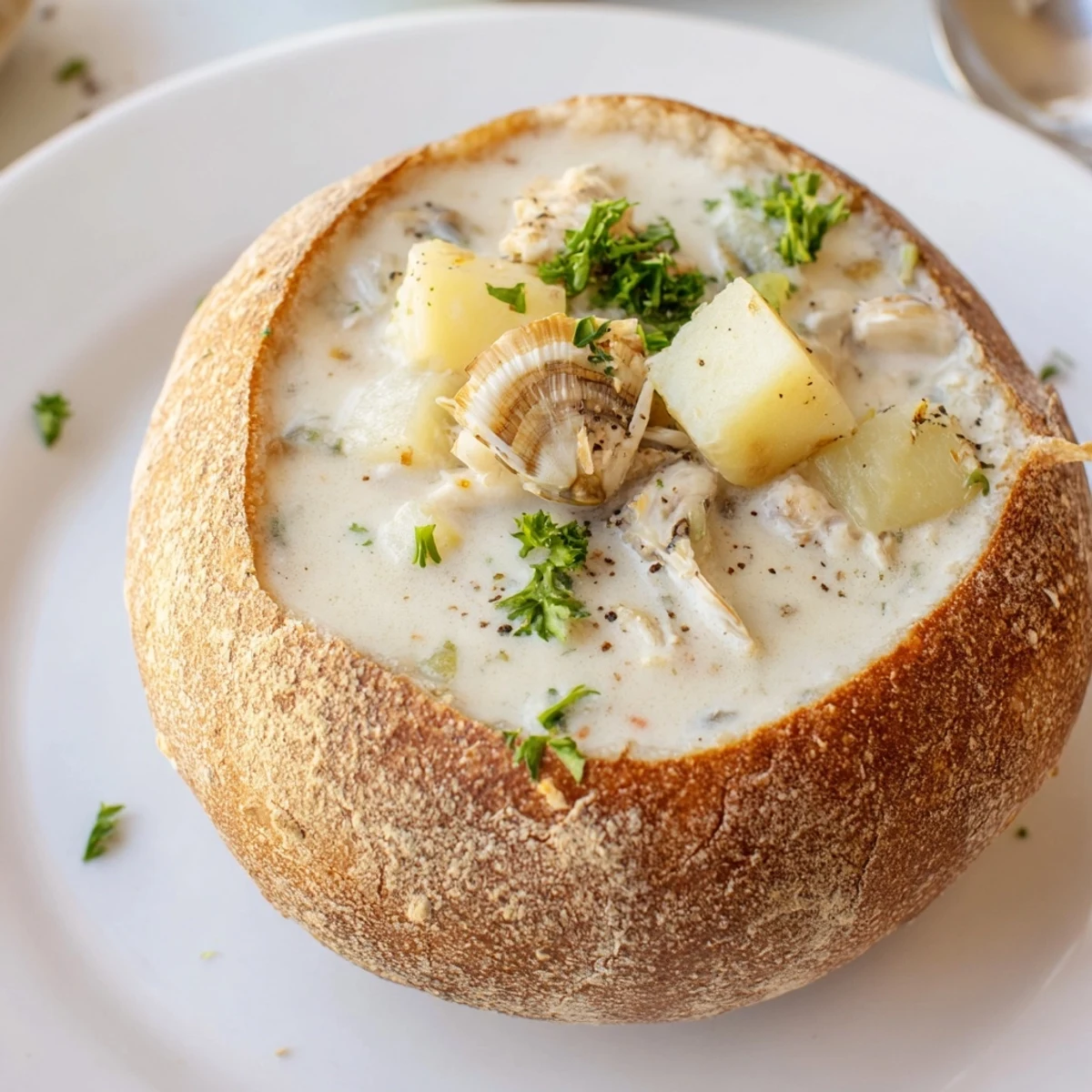
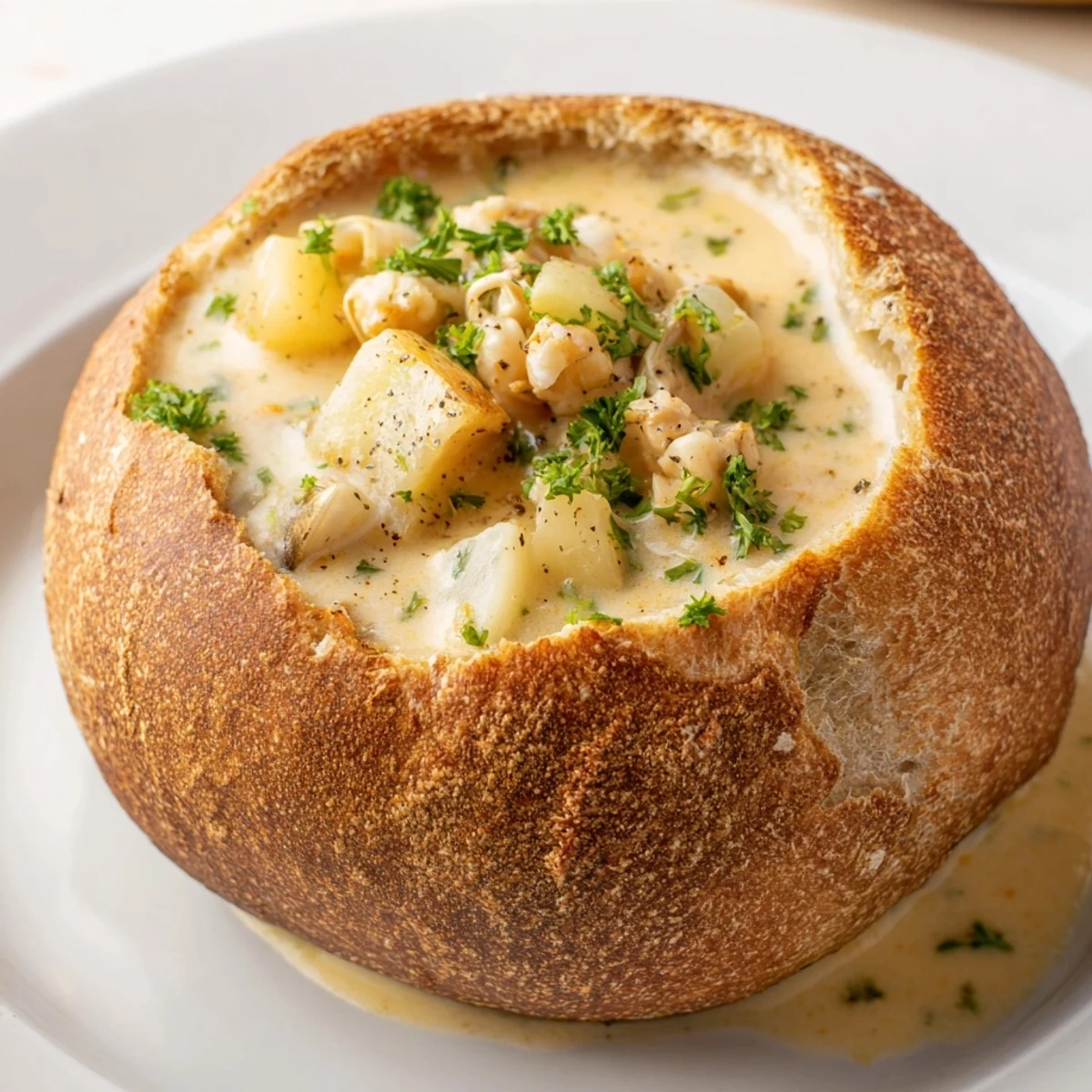
 This creamy New England style clam chowder combines tender clams, diced potatoes, and aromatic onions and celery in a rich, velvety broth made with milk, cream, and clam juice. Baked sourdough bread bowls provide a crisp and rustic vessel for the comforting chowder. Simmered with thyme and bay leaf, this hearty dish offers deep flavors and a satisfying texture. Perfect for a warming main meal, it pairs excellently with fresh parsley garnish and freshly ground black pepper.
The preparation involves sautéing vegetables in butter, forming a roux with flour, then gradually adding clam juice and dairy to thicken. The chowder simmers gently until potatoes soften and flavors meld. Loaded with clams and served piping hot in fresh bread bowls, this dish evokes cozy New England coastal fare.
There's something about the smell of butter and celery hitting a hot pan that instantly transports me to a foggy New England dock, even though I'm standing in my own kitchen. The first time I made clam chowder in sourdough bowls, I was chasing that exact memory—that briny, creamy comfort that comes from a bowl you can actually eat. It turned out better than expected, and now it's become my go-to when I want to feel like I'm feeding people something that matters.
I made this for my sister on a rainy Sunday last March, and she literally groaned after the first spoonful. The chowder was rich and velvety, but what really got her was tearing into the sourdough rim—that moment when you realize you've created something that engages all your senses at once. She asked for the recipe before she'd even finished eating.
Ingredients
- Chopped clams (2 cans, 6.5 oz each) with juice: These are the heart of the chowder—don't drain them completely, because that briny liquid is liquid gold for flavor.
- Bottled clam juice (1 cup): Amplifies the ocean flavor without any fishy overpowering, just pure brine and comfort.
- Unsalted butter (2 tablespoons): The base for building flavor, keeps the chowder from tasting one-dimensional.
- Medium onion, finely diced: Sweetness develops as it softens, balancing the brininess of the clams.
- Celery stalks (2), diced: This is the secret to depth—it adds an herbaceous note that makes people wonder what you put in there.
- Yukon Gold potatoes (2 medium), peeled and diced: These hold their shape better than russets and have just enough starch to help thicken the chowder naturally.
- All-purpose flour (3 tablespoons): Creates a roux that thickens without needing cream reduction, keeps the texture silky.
- Whole milk (2 cups) and heavy cream (1 cup): The milk lightens it slightly while the cream makes it luxurious—don't skip the cream, that's where the magic lives.
- Bay leaf and dried thyme (1/2 teaspoon): These two work together to add an herbal backbone that says New England without being obvious about it.
- Salt and freshly ground black pepper: Season at the end after the potatoes are tender, so you don't over-salt as liquid reduces.
- Small sourdough boules (4, about 6-inch diameter): The bread needs enough heft to hold chowder without dissolving—look for artisanal bakery versions if possible.
- Fresh parsley (2 tablespoons, chopped) for garnish: The brightness cuts through the richness and makes each spoonful feel fresh.
Instructions
- Toast the bread bowls:
- Preheat your oven to 350°F and slice a circle from the top of each boule, then scoop out the insides carefully, leaving about 3/4 inch of shell all around. This takes patience—rush it and you'll crack the bread. Bake the bowls and tops together for 10 minutes to dry them out slightly and warm them through, so they don't get soggy the second the chowder hits.
- Build the flavor base:
- Melt butter in a large pot over medium heat and let it get foamy, then add your diced onion and celery. You want to sauté these for about 5 minutes until they're soft and starting to smell amazing, but don't let them brown or you'll lose that sweet, delicate note. This is the foundation of everything that comes next.
- Make the roux:
- Add the diced potatoes and let them cook for 2 minutes to start softening, then sprinkle the flour over everything and stir constantly for about a minute. You're not making a thick paste—you're just coating the vegetables lightly so the flour can thicken the chowder evenly as liquid gets added.
- Add the liquid:
- Pour in the clam juice, milk, and cream slowly while whisking to prevent lumps from forming. Add the bay leaf and thyme right now, then bring everything to a gentle simmer, stirring often so nothing sticks to the bottom. This should take about 5 minutes to start steaming and thickening.
- Simmer until creamy:
- Lower the heat and simmer uncovered for about 15 minutes, stirring occasionally, until the potatoes are completely tender and the chowder has thickened to a silky consistency. You'll know it's ready when a spoon drawn through it leaves a trail that slowly fills back in.
- Finish with the clams:
- Stir in the chopped clams and all their juices, then simmer for just 2 more minutes—clams toughen quickly if overcooked. Taste it now and adjust salt and pepper (you'll need more than you think), then remove the bay leaf.
- Serve in warmth:
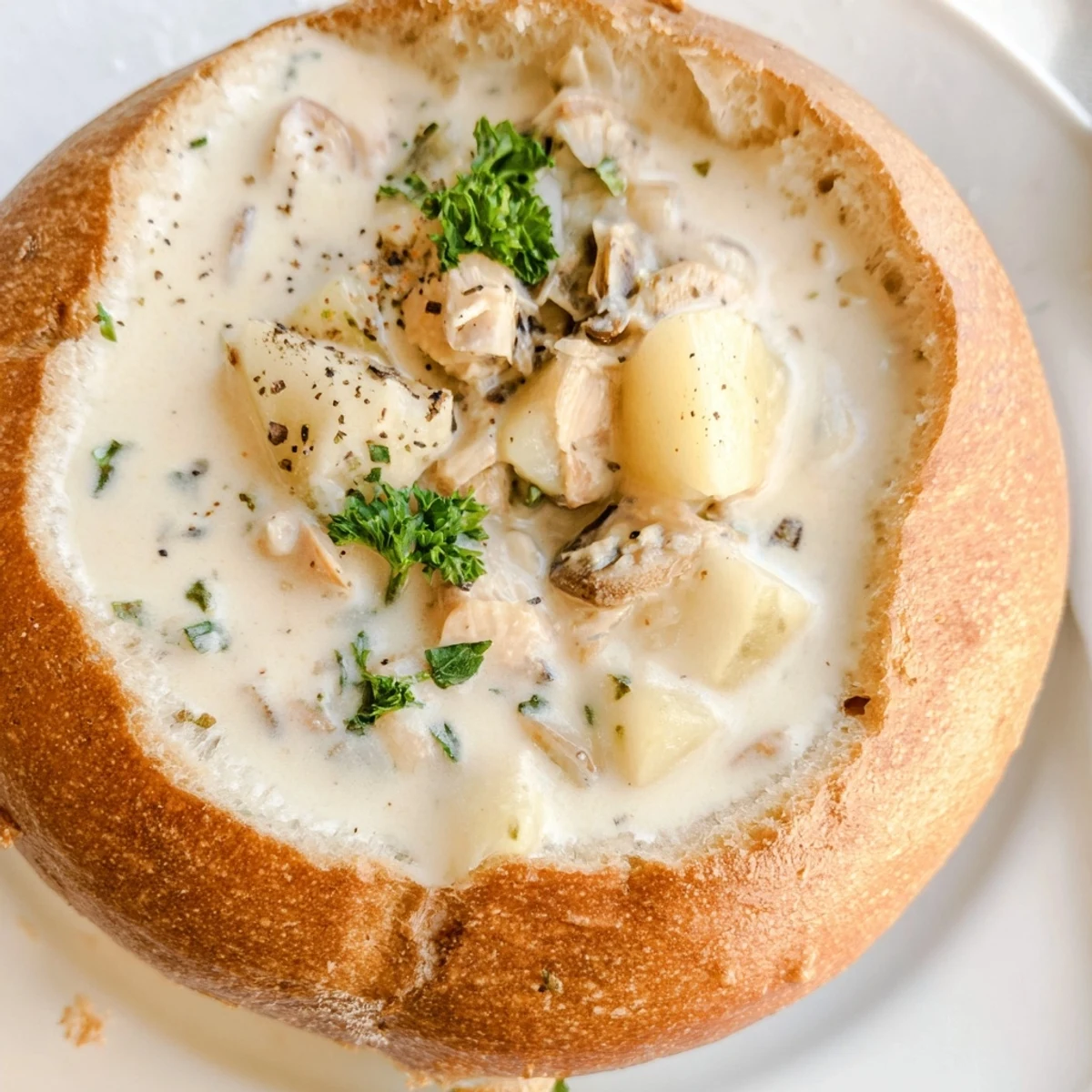
- Ladle the hot chowder carefully into each warm sourdough bowl, sprinkle with fresh parsley and a grind of black pepper, and serve immediately while everything is hot and the bread is still crispy on the outside.
 Pin this
 What I love most about this dish is the moment someone tears into that sourdough rim and takes a bite of it alongside a spoonful of chowder. It stops being just dinner and becomes an experience—something they'll remember and ask you to make again.
Making It Your Own
This chowder is flexible in ways that feel luxurious rather than compromised. If you want to add a smoky depth, crisp up 2 strips of bacon, chop them, and stir them in with the clams—the salt and smoke pair beautifully with the briny clam flavor. If you're looking for something lighter, swap the heavy cream for half-and-half or even whole milk, and you'll still get a creamy texture, just less weight in your chest afterward.
Timing and Prep Strategy
You can prep all your vegetables an hour or two ahead of time—dice the onion, celery, and potatoes, and store them separately in the fridge until you're ready to cook. This means when people arrive, you're only 35 minutes away from serving something that tastes like it took all afternoon. The bread bowls are best eaten fresh, so don't toast them more than 20 minutes before serving, or they'll start to harden.
Pairing and Serving Suggestions
A crisp white wine like Pinot Grigio cuts right through the richness and cleanses your palate between spoonfuls, or if you prefer beer, a light lager does the same job without the alcohol weight. Serve this on its own—it's substantial enough to be the entire meal, though a simple green salad on the side feels nice if you want a little brightness.
- Toast the sourdough bowls right before serving so they're at their crispiest.
- Have extra parsley and black pepper at the table so people can adjust the brightness to their taste.
- If you're making this ahead, store the chowder and bread separately, then rewarm gently and assemble just before serving.
 Pin this
 This chowder in a sourdough bowl is the kind of dish that turns an ordinary day into something worth remembering. Make it and watch what happens.
Recipe Questions & Answers
- → How do I prepare the sourdough bread bowls?
-
Cut a circle on top of each sourdough boule and hollow out the center, leaving a 3/4-inch shell. Bake them at 350°F for 10 minutes to crisp before filling.
- → Can I substitute fresh clams for canned?
-
Fresh clams can be used but require cleaning and cooking before adding. Adjust cooking time accordingly to ensure tenderness.
- → What thickens the chowder’s broth?
-
A roux made from butter and flour, combined with milk and cream, thickens the broth to a velvety consistency.
- → Is there a lighter alternative to heavy cream?
-
You can substitute half-and-half for heavy cream to reduce richness while maintaining creaminess.
- → How can I enhance the chowder’s flavor?
-
Sautéing chopped bacon with the vegetables adds a smoky depth. Fresh herbs like parsley brighten the final taste.
- → What sides pair well with this chowder?
-
A crisp Pinot Grigio or a light lager complements the rich flavors, balancing the dish nicely.