
 Pin this
 Create authentic French-style croissants without gluten through careful lamination techniques. The process involves mixing a tender dough with yeast, then encasing cold butter within through repeated folding and rolling. This creates signature flaky layers during baking. After three folding turns, shape into triangles, proof until doubled, and brush with egg wash for deep golden color. The result is a light, airy interior with crisp, shattering exterior indistinguishable from traditional versions.
The smell of butter hitting warm flour still takes me back to my grandmother's tiny kitchen in Lyon, where rainy afternoons meant one thing we were making croissants. I was ten years old, perched on a wobbly wooden chair, watching her transform simple ingredients into golden layers of magic. She'd let me help with the egg wash, my small hands trembling as I brushed that rich sheen onto each curved pastry. Those afternoons taught me that patience isn't just a virtue in baking it's the secret ingredient.
Last winter, during that week when everything was closed and time felt like it had stopped, I decided to tackle gluten-free croissants for my sister who'd recently had to give up gluten. The first attempt was a disaster flat, tough, more like sad biscuits than the flaky dreams I'd promised her. But the third batch, made on a snowed-in Sunday morning, emerged from the oven golden and impossibly light. Seeing her face light up as she tore into that first croissant, watching her realize she hadn't lost one of her favorite foods forever that's the memory I keep coming back to.
Ingredients
- Gluten-free all-purpose flour: A quality blend with xanthan gum is non-negotiable here it's what gives the dough structure and mimics gluten's elasticity
- Instant yeast: This variety dissolves beautifully into warm milk and activates quickly, giving you reliable rise without the fuss of proofing
- Unsalted butter: You'll need both softened and cold butter, each playing a different role in creating those signature layers
- Warm milk: Dairy or non-dairy works, but aim for bathwater temperature around 100°F to wake up the yeast without killing it
- Eggs: Room temperature eggs incorporate more evenly into the dough, creating a tender crumb structure
Instructions
- Mix the foundation:
- Whisk flour, sugar, salt, and yeast in a large bowl until evenly combined. Warm your milk until it feels comfortable against your wrist, then whisk in the egg. Pour this into your dry ingredients, mixing until the dough comes together in a soft, shaggy mass.
- Work in the butter:
- Beat in the softened butter until fully incorporated the dough should feel smooth and slightly tacky. Cover the bowl and refrigerate for one full hour to let the flour hydrate and the flavors meld.
- Prepare the butter block:
- Place cold butter between parchment paper and pound it with a rolling pin until pliable. Roll into a rectangle about 5 by 7 inches and chill until firm but not rock hard.
- First fold:
- Roll your chilled dough into a 10 by 14 inch rectangle on a floured surface. Place the butter layer in the center and fold the dough over it like you're wrapping a precious package. Roll out again to the same size, then fold into thirds like a letter.
- Chill and repeat:
- Wrap and chill for 30 minutes, then repeat the rolling and folding process two more times. This creates those legendary flaky layers each fold is a promise of future buttery perfection.
- Shape your croissants:
- Roll the dough into a 12 by 16 inch rectangle and cut into 8 triangles. Starting from the wide end, roll each triangle into a crescent shape, tucking the pointed tip underneath. Place on a parchment-lined sheet with some space between them.
- Proof patiently:
- Cover loosely and let rise in a warm spot for about 2 hours. You'll know they're ready when they look puffy and jiggle slightly when you gently shake the pan.
- Bake to golden:
- Preheat your oven to 400°F and whisk the egg yolk with milk for a glossy wash. Brush each croissant gently, then bake for 18 to 20 minutes until they're deeply golden and your kitchen smells like a Parisian morning.
 Pin this
 My friend Sarah, who's been gluten-free for years, cried when I first handed her a warm croissant fresh from the oven. She took one bite and said she hadn't tasted anything this good since her diagnosis five years ago. That moment, watching someone rediscover a food they thought they'd lost forever, is why I keep making these even though they take time and patience.
The Art of Lamination
Lamination is what separates croissants from regular bread it's that magical process of alternating butter and dough layers. The key is keeping everything cold but workable, like a perfectly tempered chocolate. When the butter melts between layers in the oven, it creates steam that puffs the dough apart, leaving you with those ethereal pockets that shatter when you bite.
Timing Your Rise
The proofing stage is where most home bakers get anxious, but gluten-free dough is actually more forgiving than you might think. Look for visual cues rather than timing alone your croissants should look visibly puffy and feel aerated when touched gently. A warm oven with just the light on, or a sunny windowsill, creates the perfect draft-free environment.
Serving and Storing
Fresh croissants are undoubtedly best eaten within hours of baking, ideally while still slightly warm. That said, life doesn't always align with baking schedules, and these freeze beautifully once completely cool. Wrap individually in foil and freeze for up to a month, then reheat in a 350°F oven for about 8 minutes to recrisp.
- Slice them in half while warm and stuff with ham and gruyère for a legendary croissant sandwich
- A day-old croissant makes incredible bread pudding simply cube and soak in a vanilla custard before baking
- Store in a paper bag at room temperature rather than plastic, which can make them soggy
 Pin this
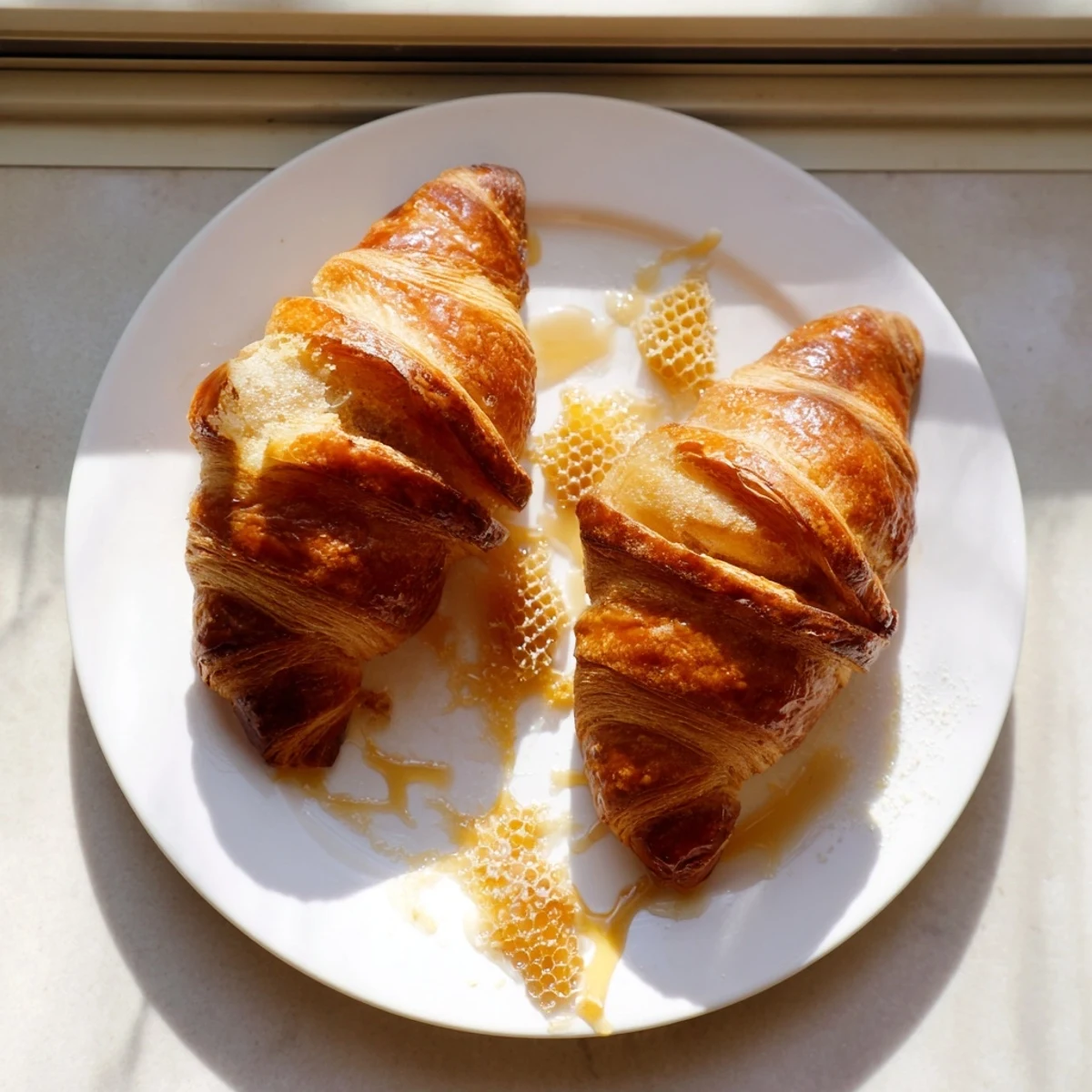
 There's something profoundly satisfying about pulling a tray of golden croissants from the oven, especially when you've made them entirely your own way. May your kitchen smell of butter and triumph, and may every batch teach you something new.
Recipe Questions & Answers
- → Can I make these dairy-free?
-
Yes, substitute plant-based butter blocks and non-dairy milk. Ensure the butter alternative is firm enough for lamination and stays cold during folding.
- → Why do my croissants flatten in the oven?
-
This typically happens when the dough isn't chilled enough before baking or if the butter melts into the dough during proofing. Maintain cold temperatures throughout lamination.
- → Can I freeze the dough?
-
Freeze after completing all folds and shaping. Wrap individually and freeze up to 2 weeks. Thaw overnight in refrigerator, then proof and bake as directed.
- → What gluten-free flour works best?
-
Use a blend containing xanthan gum with rice flour, potato starch, and tapioca starch. These proteins and starches mimic gluten's elastic properties for proper lamination.
- → How do I know when they're fully proofed?
-
Gently press the dough—if it springs back slowly, it's ready. Over-proofed dough will collapse, while under-proofed won't achieve maximum volume in the oven.