
 Pin this
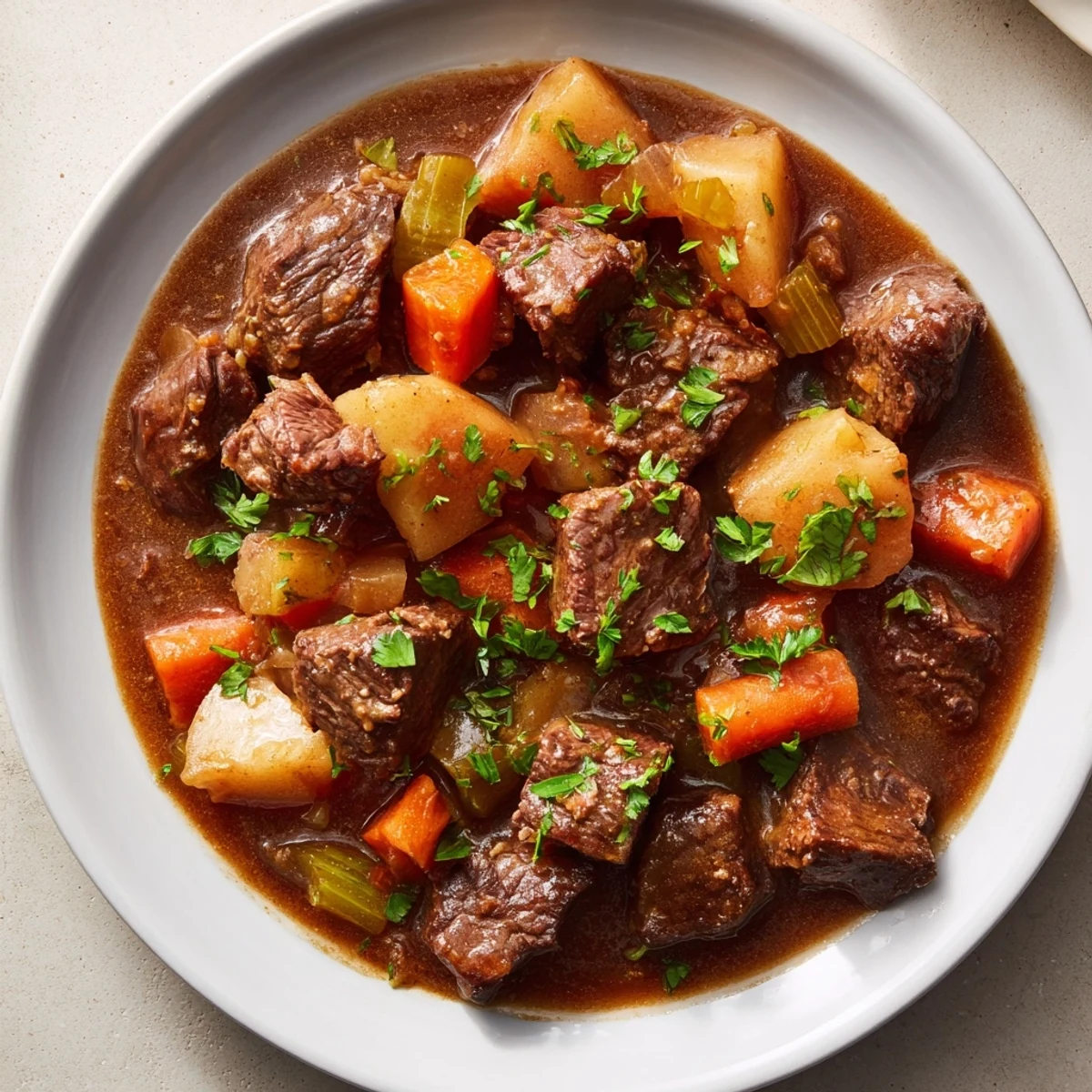
 This hearty beef stew features tender chunks of beef chuck simmered slowly with carrots, celery, and potatoes. Aromatic herbs like thyme, rosemary, and bay leaves infuse the broth, while a splash of red wine enhances depth. The stew is thickened lightly with flour and finished with fresh parsley garnish. Perfect for a comforting and filling meal, it pairs well with crusty bread or a robust red wine.
Preparation involves searing the beef, sautéing aromatics, and simmering everything until fork-tender. This classic American-style dish balances savory meats and vegetables for a deeply satisfying experience on cooler days.
There's something about the smell of beef browning in a hot pot that instantly transports you to a cozy kitchen on a cold afternoon. My grandmother used to make this stew every November, and I'd stand on a stool watching the meat sizzle, mesmerized by how something so simple could become so deeply comforting. Years later, I realized it wasn't just nostalgia—it was the care in every step, from searing the beef until it's golden to letting it simmer low and slow until forks practically melt through the meat. This is the kind of dish that fills your house with warmth before the first spoonful even reaches your lips.
I made this for my partner on our first winter together, and he came home to find the kitchen wrapped in that unmistakable savory aroma. He stood in the doorway for a moment, just breathing it in, and said something like, "This smells like home." That's when I knew I'd gotten the recipe right—it wasn't about technique, it was about creating a moment that felt safe and nourishing.
Ingredients
- Beef chuck (2 lbs, cut into 1.5-inch cubes): Chuck has enough marbling to stay tender during the long braise, so don't skip it for leaner cuts.
- Olive oil (3 tbsp): Split between searing the meat and sautéing aromatics to build layers of flavor.
- Yellow onion (1 large, diced): The foundation that sweetens slightly as it cooks and thickens the broth naturally.
- Garlic (3 cloves, minced): Add it after the onion is soft so it doesn't burn and turn bitter.
- Carrots (3 medium, sliced): Their sweetness balances the savory beef and wine, and they soften to the perfect bite after two hours.
- Celery (2 stalks, sliced): Often overlooked, but it adds a subtle earthiness that ties the whole pot together.
- Potatoes (3 medium, chunked): They'll absorb the broth and help thicken it as their starches release into the liquid.
- Tomato paste (2 tbsp): This concentrated umami bomb deepens the color and richness without making the stew taste tomatoey.
- Beef broth (4 cups): Use the best broth you can find or make your own—it's the backbone of the entire dish.
- Dry red wine (1 cup, optional): The wine adds complexity and acidity that keeps the stew from tasting one-dimensional.
- Bay leaves (2): Remove them at the end or someone will find one and wonder why it's in their bowl.
- Thyme and rosemary (1 tsp each, dried): These woody herbs infuse the broth without overpowering the beef.
- Salt and black pepper: Season generously in layers, tasting as you go rather than dumping it all in at once.
- Fresh parsley (2 tbsp, chopped): A bright, fresh finish that cuts through the richness and makes the bowl look alive.
- All-purpose flour (2 tbsp): This creates a silky, thickened broth once it cooks into the liquid.
Instructions
- Prepare and season the beef:
- Pat your beef cubes dry—this is the move that makes them brown properly instead of steaming. Sprinkle salt and pepper all over, letting them sit while you set up the pot.
- Sear the meat in batches:
- Heat 2 tbsp oil until it shimmers, then add just enough beef to fit comfortably without crowding. Listen for that aggressive sizzle—it means the heat is right. Don't move the meat for 2-3 minutes so it develops a golden crust, then flip and repeat on all sides, working in batches and setting each batch aside.
- Build the aromatic base:
- In the same pot with the remaining oil, cook the diced onion and minced garlic over medium heat for about 3 minutes until softened and fragrant. You should see the onion start to turn translucent.
- Add tomato paste and flour:
- Stir in the tomato paste and cook it for 1 minute to deepen its flavor, then sprinkle the flour over everything and stir until the vegetables are coated. This prevents lumps and helps thicken the stew later.
- Deglaze and simmer:
- Pour in the wine (if using) and scrape the pot bottom with your wooden spoon to dissolve all those browned, flavorful bits—this is liquid gold. Let it simmer for 2 minutes so the wine mellows slightly.
- Add broth and bring it all together:
- Pour in the beef broth and add the browned beef back along with any juices that pooled underneath. Stir in the bay leaves, thyme, rosemary, and all the vegetables—carrots, celery, and potatoes should nestle into the liquid. Bring the whole pot to a boil, stirring occasionally.
- Low and slow for richness:
- Reduce the heat to low, cover, and let it simmer for 2 hours, stirring every 30 minutes or so. The meat will transform from firm to impossibly tender, and the broth will deepen in color and flavor. You'll know it's done when a fork slides through the beef with almost no resistance.
- Final touches:
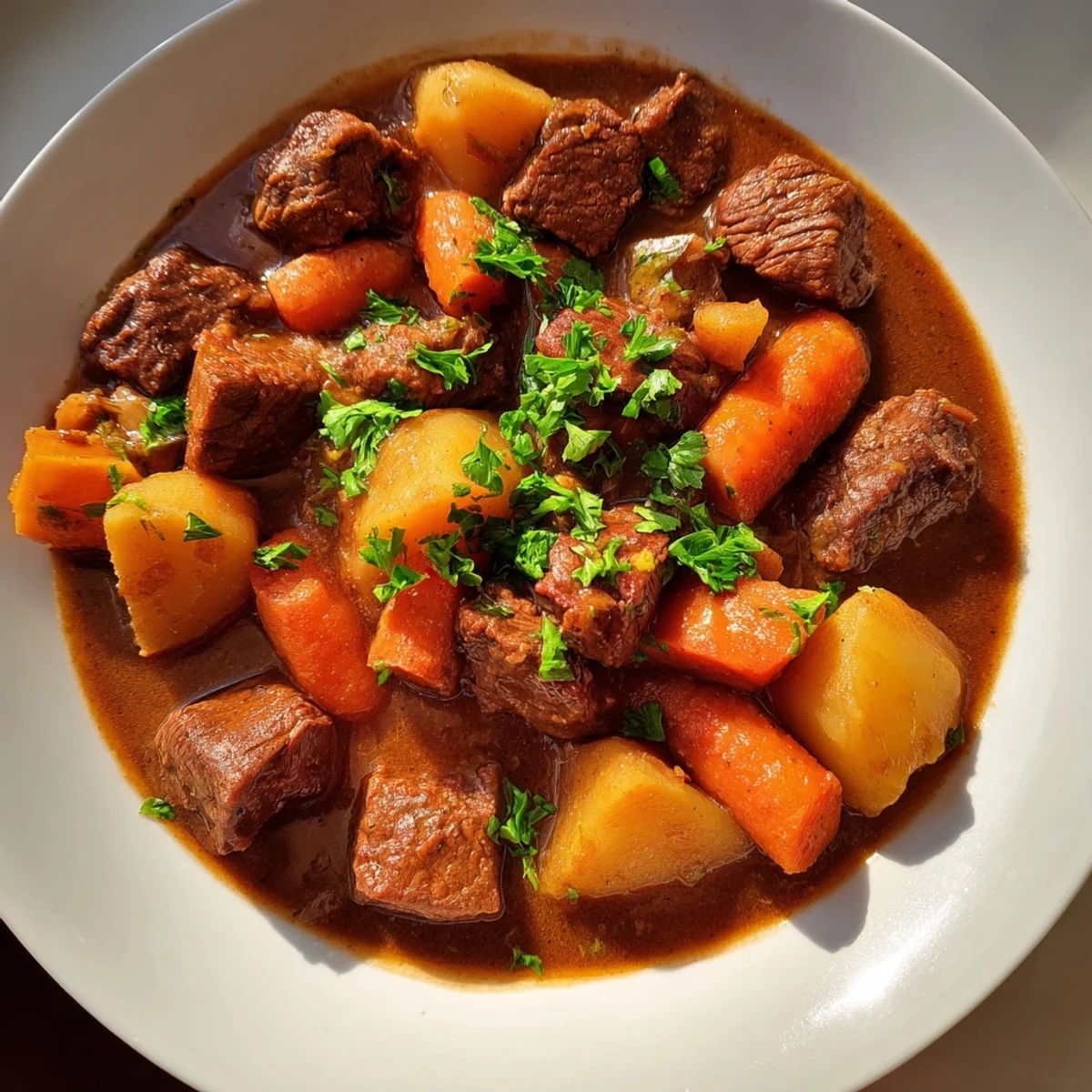
- Remove the bay leaves and taste the stew. Season with more salt and pepper if it needs it, remembering that the flavors have concentrated during cooking. Ladle it into bowls and shower each one with fresh parsley.
 Pin this
 There's a quiet magic in sitting down with a bowl of this stew on a cold evening, when the world outside feels too harsh and your kitchen becomes a refuge. It's the kind of dish that reminds you why people have gathered around tables for thousands of years.
Wine Pairing and Serving
A robust red wine—Burgundy, Côtes du Rhône, or even a good Cabernet—echoes the wine already in the pot and stands up to the beef's richness. Serve the stew in shallow bowls with crusty bread on the side so you can soak up every last drop of that silky broth. Pair it with roasted root vegetables or a simple green salad if you want something fresher alongside.
Make It Your Own
Once you understand the basics, this stew becomes a canvas for improvisation. I've added diced mushrooms late in cooking for an earthy depth, swapped in parsnips or sweet potatoes for regular potatoes, and even stirred in a splash of Worcestershire sauce at the end for extra savory complexity. The structure stays the same—sear, build aromatics, add liquid, and braise low—but the details can shift with what's in your kitchen or what you're craving.
Storage, Reheating, and Make-Ahead Tips
This stew freezes beautifully and actually improves as it sits, making it ideal for batch cooking. Let it cool to room temperature before transferring to airtight containers, and it'll keep in the fridge for up to 4 days or frozen for 2-3 months. When reheating, thaw overnight in the fridge and warm gently on the stovetop over low heat, stirring occasionally and adding a splash of broth if it's thickened too much.
- Make this on a Sunday and portion it out for midweek dinners when cooking feels impossible.
- Double the recipe and freeze half for future you—that person will be incredibly grateful.
- Add the fresh parsley right before serving so it stays bright and doesn't wilt into the hot stew.
 Pin this
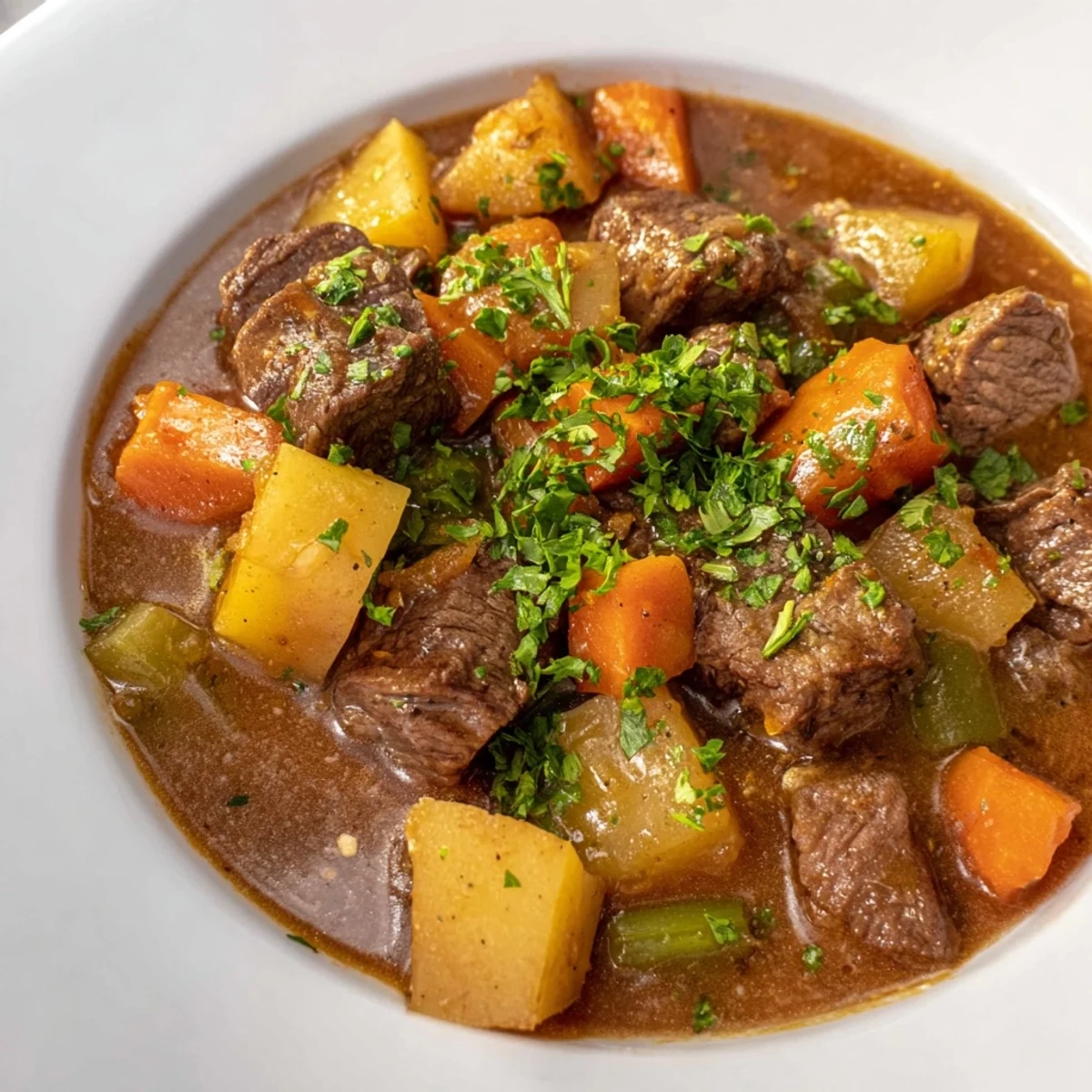
 This beef stew is proof that the most nourishing dishes are often the simplest ones, requiring patience and decent ingredients rather than fancy technique. Make it for someone you love, and let the food do what it does best—bring people together and make them feel cared for.
Recipe Questions & Answers
- → What cut of beef works best for this stew?
-
Beef chuck cut into 1.5-inch cubes is ideal due to its balance of fat and connective tissue, which breaks down during slow cooking to create tender, flavorful meat.
- → Can I substitute the red wine in the stew?
-
Yes, you can replace the red wine with additional beef broth for a non-alcoholic version without compromising the rich flavor.
- → How do I thicken the stew broth properly?
-
Sprinkling a small amount of all-purpose flour over the sautéed vegetables before adding liquids helps create a smooth, thickened consistency as it simmers.
- → What are good vegetables to include in this dish?
-
Traditional root vegetables like carrots, celery, and potatoes add texture and depth, complementing the rich beef and herbs perfectly.
- → How long should the stew simmer for optimal tenderness?
-
Simmering the stew gently for about two hours allows the beef to become fork-tender and the flavors to meld beautifully.