
 Pin this
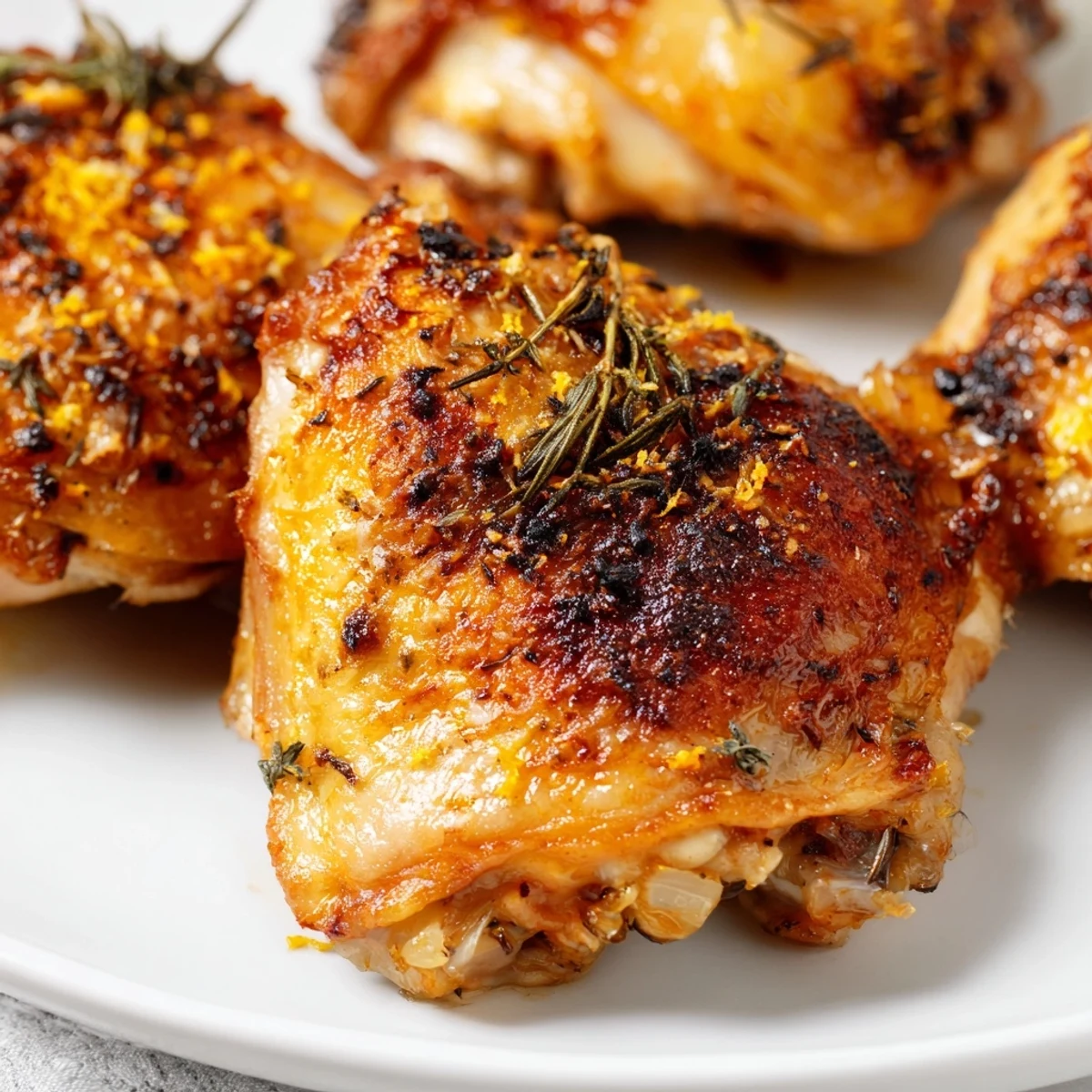
 Enjoy tender chicken thighs roasted to golden perfection, accentuated by fresh thyme and zesty lemon flavors. The olive oil marinade melds perfectly with garlic and spices, creating a juicy texture and crisp skin. Cooked until the right internal temperature, this dish offers a delightful balance of savory and citrus notes. Ideal for a quick, gluten-free meal that pairs well with roasted vegetables or fresh salads. Resting the meat ensures juiciness, while optional broiling adds extra crispness.
There's something about the smell of lemon and thyme hitting hot chicken skin that stops me mid-thought every single time. I discovered this combination by accident one evening when I had lemons going soft on the counter and a bunch of thyme that needed using up, so I threw them together on some chicken thighs and roasted. The result was so golden and juicy that it became my go-to whenever I need something that feels restaurant-quality but took barely any effort.
I made this for my partner after they'd had a rough week, and watching their face when they bit into a thigh with that caramelized skin and bright lemon flavor made me realize this wasn't just dinner—it was proof that simple food handled thoughtfully tastes like care. They asked for it again the next week, and the week after that.
Ingredients
- Bone-in, skin-on chicken thighs (8 pieces, about 1.2 kg): The bones keep everything moist and the skin is where all the magic happens—it's where the Maillard reaction turns fat into liquid gold.
- Olive oil (2 tablespoons): Just enough to coat and help the skin render, but not so much that you're swimming in grease.
- Kosher salt (1 teaspoon): Season generously enough that you actually taste it, not timidly.
- Freshly ground black pepper (½ teaspoon): Fresh is worth the extra step—pre-ground tastes like dust.
- Garlic powder (1 teaspoon): Adds depth without turning the dish into garlic soup.
- Fresh thyme leaves (1 tablespoon, or 1 teaspoon if dried): If you have fresh, use it—the flavor is more delicate and bright.
- Lemon zest and juice (1 whole lemon): The zest gives floral brightness, the juice cuts through the richness; use both for the full effect.
- Extra lemon wedges and fresh thyme sprigs (for garnish): These aren't just decoration—a squeeze of fresh lemon at the table wakes everything up.
Instructions
- Get your oven ready:
- Preheat to 220°C (425°F) so it's properly hot when the chicken goes in. A screaming oven is what creates that golden skin.
- Dry the chicken completely:
- Pat the thighs down with paper towels until they're genuinely dry—moisture is the enemy of crispy skin. This step matters more than you might think.
- Build the flavor base:
- Whisk together the oil, salt, pepper, garlic powder, fresh thyme, lemon zest, and juice in a small bowl. Smell it—you're looking for that bright herbaceous note coming through.
- Coat the chicken evenly:
- Toss the thighs in the marinade, making sure every piece is coated and the seasonings aren't pooling in the bowl. Get your hands in there if you need to.
- Arrange skin-side up:
- Place the thighs on a baking sheet with some space between them—they need room to breathe and for air to circulate underneath. Skin-side up is non-negotiable for crispiness.
- Roast until golden:
- Roast for 35 minutes, until the skin is deeply golden and an instant-read thermometer reads 75°C (165°F) at the thickest part of the thigh without touching bone. The house will smell like a Mediterranean dream by minute 20.
- Rest before serving:
- Let them sit for 5 minutes so the juices redistribute—this is when they finish cooking slightly and become more tender.
 Pin this
 I served this at a small dinner party once and someone asked if I'd learned to cook French, which made me laugh—it's barely a recipe, just ingredients that happen to work together in the most obvious way. But that's the point: sometimes the best meals are the ones where you're not trying to impress, you're just cooking something you actually want to eat.
Why Thyme and Lemon Work
Thyme is subtle and woodsy, almost peppery, and it doesn't fight with the brightness of lemon the way stronger herbs might. The acid from the lemon cuts through the richness of the chicken fat while the thyme adds a savory complexity that makes you keep eating. Together they're like they were made for each other, and honestly, they were.
Ways to Serve This
Roasted potatoes are the obvious partner—let them roast in the same oven and catch some of the dripping fat from the chicken, and you've got something transcendent. A simple green salad with more lemon vinaigrette is perfect if you want something lighter, or crusty bread to soak up the pan juices if you're feeling less restrained.
Small Tricks That Matter
If you're having a rough day in the kitchen, this is your friend because there's almost nothing that can go wrong. The only real variables are your oven temperature and how much you trust your thermometer.
- Broil the chicken for the last 2-3 minutes if you want the skin absolutely shattered-crispy, but watch it constantly because broilers are unpredictable.
- Make extra lemon wedges because people always squeeze more on at the table, even when they think they won't.
- If you're using dried thyme instead of fresh, use half the amount—the flavor is more concentrated.
 Pin this
 This is the kind of meal that feels like both a weeknight dinner and something worth celebrating, which is exactly what it should be. Cook it when you need something that works and tastes like you care.
Recipe Questions & Answers
- → How do you achieve crispy skin on chicken thighs?
-
Pat the skin dry before roasting and finish under the broiler for 2-3 minutes to enhance crispiness.
- → What internal temperature should the chicken reach?
-
The chicken thighs should reach 75°C (165°F) internally to ensure they are fully cooked and safe to eat.
- → Can I substitute other herbs for thyme?
-
Rosemary or oregano can work as alternatives, though thyme offers a unique earthy freshness complementary to lemon.
- → What sides pair well with this dish?
-
Roasted vegetables, potatoes, or a crisp green salad enhance the flavors and balance the citrus notes.
- → Is it necessary to marinate the chicken?
-
Marinating allows the flavors of olive oil, lemon, and spices to penetrate, resulting in more tender and flavorful meat.