
 Pin this
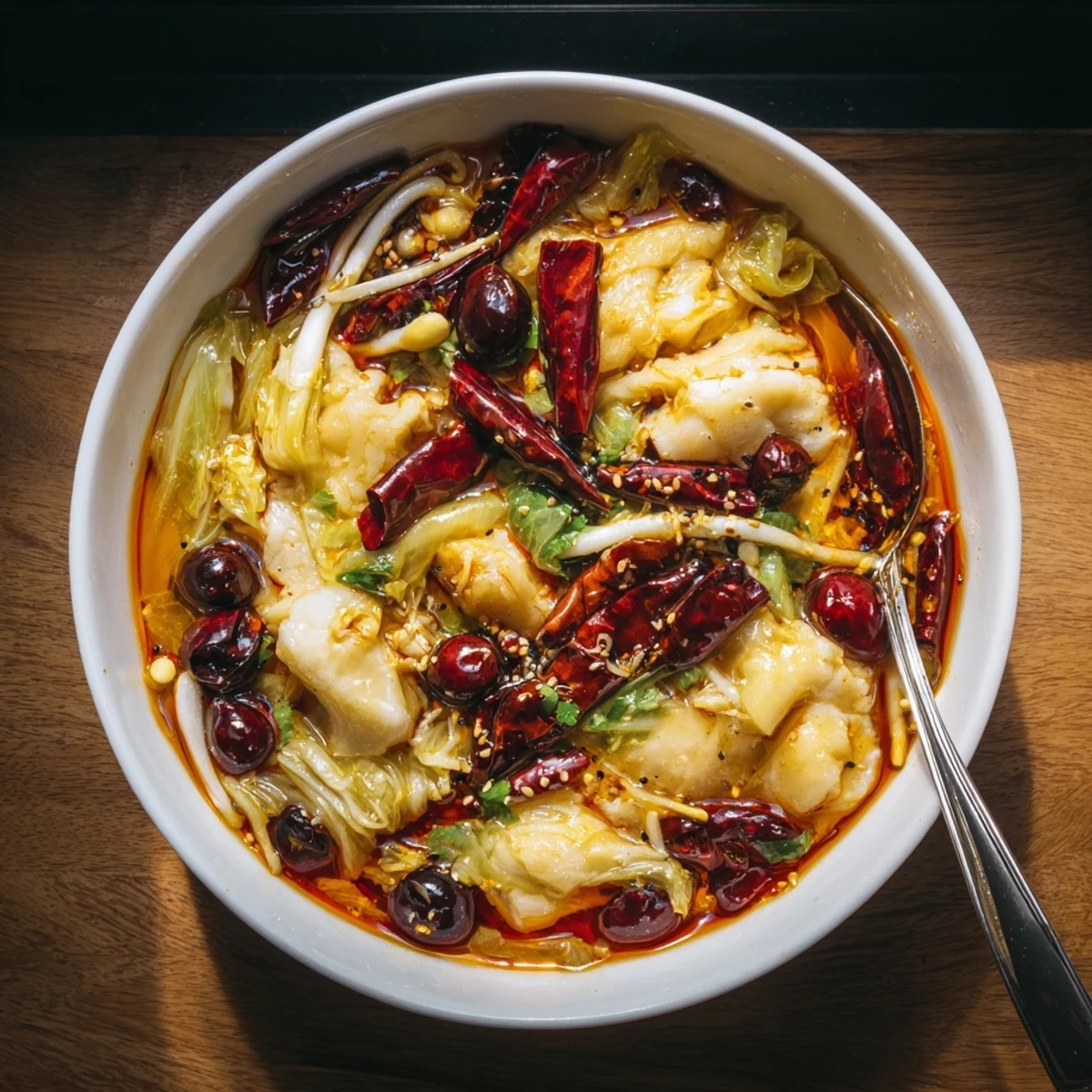
 Marinated white fish is gently simmered in a fragrant, chili-spiked Sichuan broth with doubanjiang, peppercorns, ginger and garlic. Vegetables like napa cabbage, mushrooms and bean sprouts are briefly cooked until tender, then the fish is added for 3–4 minutes until opaque. A finishing hot oil pour blooms the aromatics. Prep ~25 min, cook ~20 min; serves 4. Adjust chilies and peppercorns to taste.
The clatter of my knife against the board was interrupted by a sweetly pungent cloud of ginger one drizzly Saturday as I tried Sichuan Spicy Fish for the first time. I’d watched a late-night food documentary that left me craving the numbing heat and mingled aromas of real Sichuan fare. As the fish simmered, my tiny kitchen transformed, every surface fragrant with chili and peppercorns. By the time I reached for my chopsticks, I realized this was a dish with a personality all its own—fiery, bold, and strangely comforting.
One chilly evening, my friend Jia stopped by unexpectedly, shivering from her walk across town. As soon as the broth hit the stove, the kitchen filled with that characteristic Sichuan tingle, and soon enough, we were hunched over bowls, laughing at how we tried (and failed) not to tear up from the heat. Even she agreed it tasted like a memory of home, which is about the highest compliment possible, if you ask me.
Ingredients
- White fish fillets: Tilapia or cod give wonderfully delicate texture; slice into even pieces for gentle cooking.
- Egg white: It’s a little trick that keeps the fish ultra tender and silky after simmering.
- Shaoxing wine: Adds a mellow warmth to the marinade; dry sherry works beautifully in a pinch.
- Cornstarch: Helps the coating cling and gives the fish that melt-in-the-mouth finish.
- Chicken stock: Deepens the broth and picks up all those layered spices—homemade or store-bought, either works.
- Vegetable oil: You want something neutral to let the spice sing.
- Garlic, ginger, and scallions: The base trifecta for savory, aromatic depth—slice and chop them fresh if you can.
- Sichuan peppercorns: Key to the signature numbing zing; toast them lightly, but don’t let them scorch.
- Dried red chilies: Shake out most seeds to control the fire, but keep enough for a proper kick.
- Doubanjiang (chili bean paste): Salty, spicy, and deeply fragrant—it’s irreplaceable here, so look for a good-quality jar.
- Light soy sauce: Balances salt and umami in the broth.
- Napa cabbage: Sweet and crisp, it softens but never disappears in the soup.
- Bean sprouts: They add fresh crunch; rinse well to keep their snap.
- Enoki or shiitake mushrooms: Earthy umami, with enoki’s delicate threads or shiitake’s chewy bite—either brings something special.
- Fresh cilantro: Adds a cooling, herbal finish to tame the heat.
- Scallion (for garnish): Scatter on top for brightness and a bit of color.
- Toasted sesame seeds (optional): Lend a mellow, toasty aroma when sprinkled on just before serving.
Instructions
- Marinate the Fish:
- Combine the fish fillets with egg white, Shaoxing wine, salt, and cornstarch in a bowl. Blend them gently by hand until each piece is slick and glossy, then set aside to marinate for 15 minutes.
- Sauté Aromatics:
- Heat 1 tablespoon of oil in your largest pot or wok, then toss in garlic, ginger, and scallions. Sauté just until they sizzle, releasing a wave of perfume that wraps around you.
- Bloom Chilies & Peppercorns:
- Add Sichuan peppercorns and dried chilies, stirring constantly so nothing burns. The immediate tingle in your nose means the oils have hit their stride.
- Build the Broth:
- Stir in doubanjiang and cook until the vibrant red oil starts to separate and the whole mix looks glossy. Pour in chicken stock and soy sauce and bring to an eager boil.
- Simmer the Vegetables:
- Add napa cabbage, mushrooms, and bean sprouts to the bubbling broth. Let them soften just enough to yield but still retain their own personalities, about 3–4 minutes.
- Cook the Fish:
- Gently lower marinated fish pieces into the broth, spacing them so they don’t clump. Watch closely—they’ll turn opaque and delicate within 3–4 minutes.
- Assemble & Sizzle:
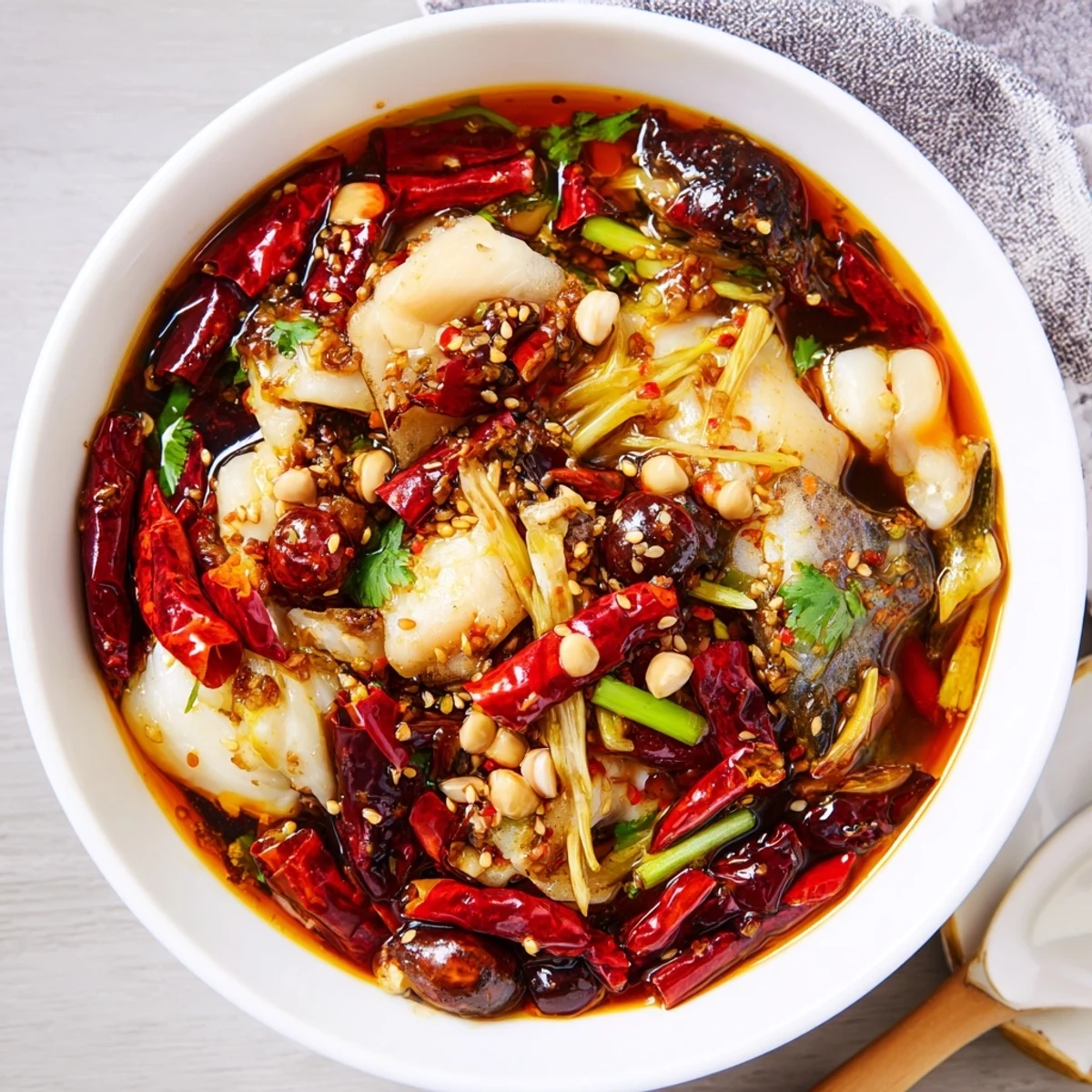
- Scoop the fish, vegetables, and broth into a big serving bowl. Heat the final tablespoon of oil in a small pan until nearly smoking, then pour over everything for a dramatic sizzle.
- Garnish & Serve:
- Finish with chopped cilantro, fresh scallion, and a sprinkle of sesame seeds. Serve right away, and be ready for the nose-tingling aroma as you dig in.
 Pin this
 The first time my partner tried to do the hot oil sizzle step, he jumped with a yelp when the oil hissed wildly over the chilies and herbs. We ended up laughing so hard that we almost forgot to garnish the dish, but that crackle was worth every wide-eyed gasp.
How to Choose the Best Fish
I’ve used everything from tilapia to cod and even catfish when the market was out of the usual catch. The main thing is to pick fillets with minimal bones and a gentle flavor, so the broth has room to shine. Avoid fish that flakes apart too easily—firm is best for easy handling.
Dialing in the Perfect Heat
The first time I made this, I used every chili called for, not realizing just how potent some varieties are. Start mild, taste the broth, and add more chilies to suit your mood—or everyone’s spice-tolerance at the table. Nothing ruins the magic like a numbed-out tongue, unless, of course, that’s the goal.
Simplifying the Prep (and Saving Your Sanity)
Lay everything out before starting—mis en place is your best friend when faced with a dozen aromatics. Don’t be tempted to skip the quick marinade; it really does make a difference in the final bite. Taste the broth before adding the fish to tweak seasoning while it’s still forgiving.
- Use kitchen gloves if you’re sensitive to chilies—it saves hours of regret later.
- Keep a slotted spoon nearby to easily fish out the chilies if you like a milder experience.
- Pair leftovers with noodles or rice for a second-day lunch that’s even better than the first.
 Pin this
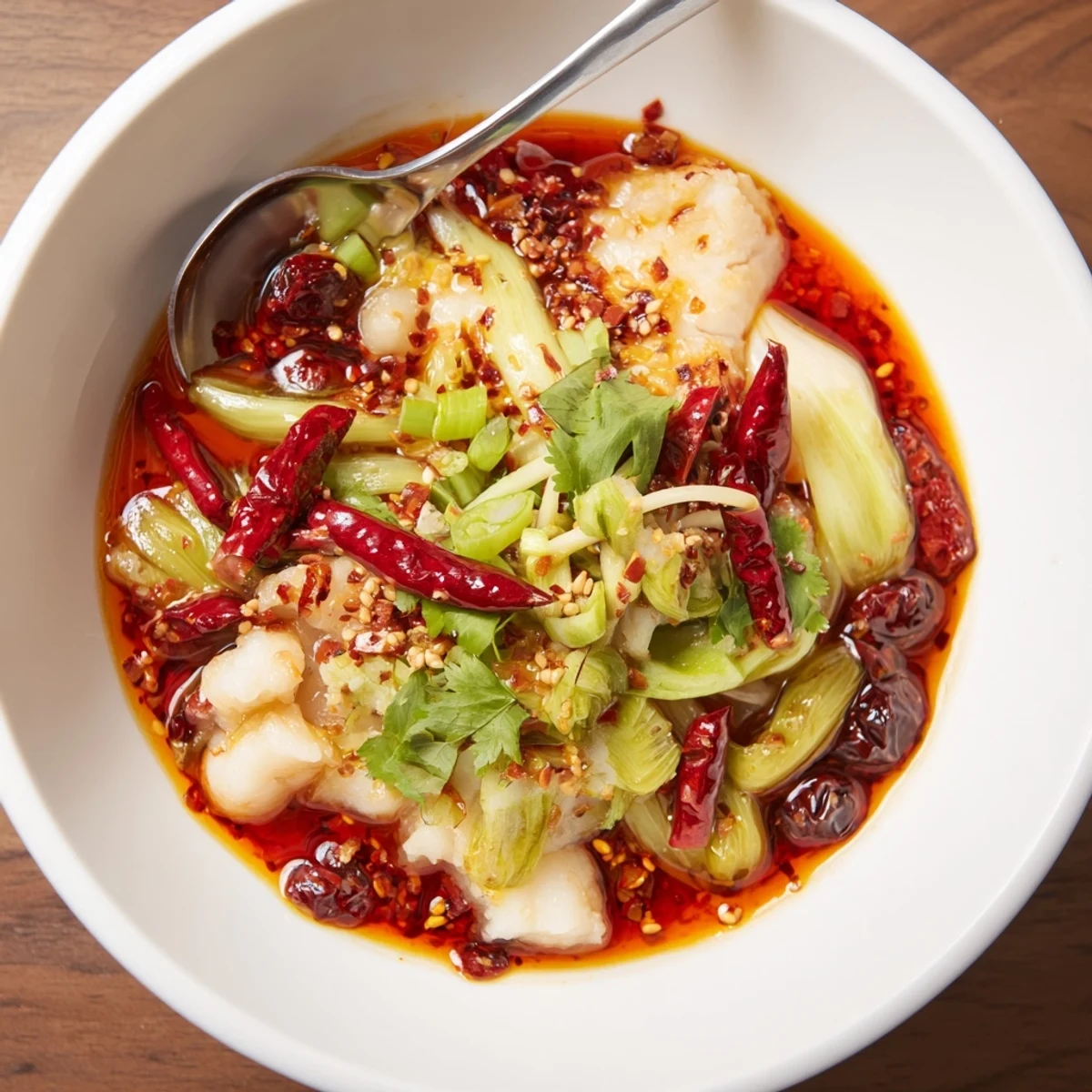
 Sichuan Spicy Fish shines brightest when shared—spicy, aromatic, and perfect for lively conversation. I hope it brings your table as much color and laughter as it has to mine.
Recipe Questions & Answers
- → What fish works best for this dish?
-
Use firm white fish such as cod, tilapia or haddock. They hold together in the spicy broth and cook quickly to a tender, opaque finish.
- → How do I control the heat level?
-
Reduce dried chilies and Sichuan peppercorns for milder heat. Seed the chilies or use fewer pieces; add more later to taste. Doubanjiang contributes both heat and umami—use sparingly if needed.
- → Can I make it gluten-free?
-
Choose a gluten-free doubanjiang or omit it and boost flavor with a touch of gluten-free chili paste and extra soy alternative like tamari labeled gluten-free. Check all labels for hidden wheat.
- → How do I avoid overcooking the fish?
-
Cut fish into uniform bite-sized pieces and add them to simmering broth for only 3–4 minutes, until opaque. Gentle simmering rather than a rolling boil prevents toughness.
- → What are good vegetable substitutions?
-
Swap napa cabbage for bok choy or add firm tofu for extra protein. Snow peas, baby bok choy, or sliced bell pepper work well with the spicy broth.
- → Any tips for maximizing the aroma?
-
Toast Sichuan peppercorns briefly before frying to release oils, and finish with hot oil poured over the aromatics to bloom the chilies, garlic and scallions for an immediate fragrance lift.