
 Pin this
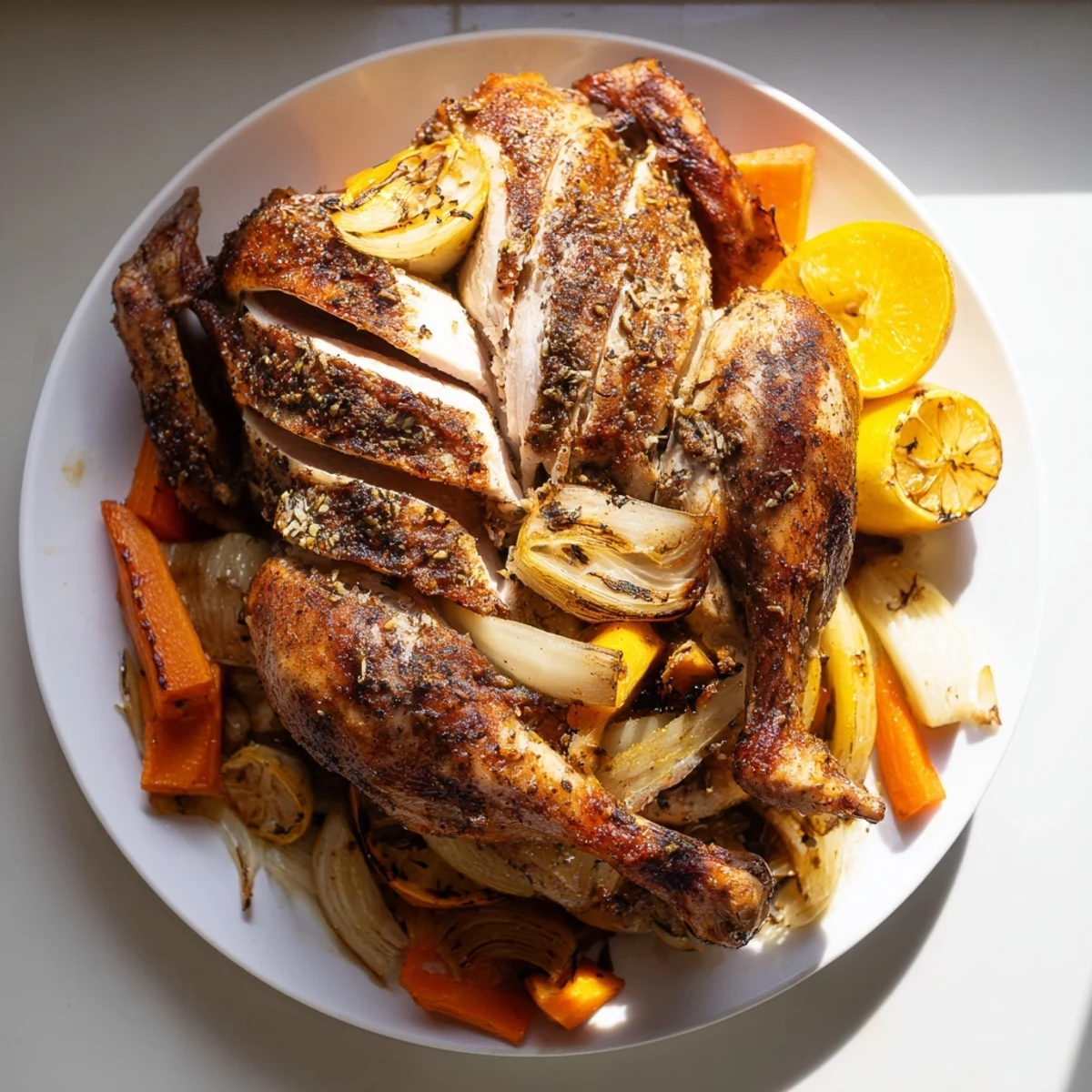
 This dish features a whole chicken slowly roasted at low heat to ensure juicy, tender meat infused with vibrant flavors of garlic, lemon, thyme, and rosemary. Carrots, celery, and onion create a savory bed that complements the rich pan juices, which are basted throughout cooking. A final high-temperature roast crisps the skin to perfection. Ideal for a comforting, flavorful main course.
My neighbor knocked on my door one Sunday holding a whole chicken and asked if I knew how to make it taste like something worth waiting for. We cleared my kitchen counter, turned the oven low, and let time do most of the work. The smell that filled the apartment that afternoon made her stay for dinner.
I made this for my parents during a winter visit and my dad, who never comments on food, asked if I could write it down for him. He does not cook, but he wanted my mom to make it the way I did. That might be the best compliment a recipe has ever gotten in my family.
Ingredients
- Whole chicken (about 1.8 kg): Look for one that feels plump and cold, and make sure you pull out the giblets before you start or you will forget until it is too late.
- Lemon: You are stuffing it inside, so the oils in the peel perfume the meat from within while it roasts.
- Garlic: A whole head halved crosswise turns sweet and soft, nothing sharp or bitter.
- Fresh thyme and rosemary: These hold up under long heat better than delicate herbs and their woody stems add backbone to the pan drippings.
- Carrots, celery, onion: They become a edible roasting rack and soak up all the drippings, turning soft and golden.
- Olive oil: This helps the skin bronze and crisp, especially in that final high heat blast.
- Kosher salt, black pepper, paprika: Simple seasoning that does not compete with the chicken, just makes it taste more like itself.
- Chicken broth: Just enough to keep the pan from drying out and to give you something to baste with halfway through.
Instructions
- Prep the bird:
- Pat it completely dry with paper towels, the drier the skin the better it will crisp later. Rub olive oil all over, then season generously with salt, pepper, and paprika if you are using it.
- Stuff the cavity:
- Push the lemon halves, garlic head, and half the thyme and rosemary inside the chicken. It will smell incredible and keep the meat moist from the inside out.
- Build the base:
- Scatter the carrots, celery, onion, and remaining herbs across the bottom of your roasting pan. Set the chicken on top, breast side up, and pour the broth around the vegetables.
- Slow roast:
- Slide it into a 150°C (300°F) oven and let it go for 2 hours, basting with the pan juices every 45 minutes. The low heat makes the meat impossibly tender.
- Crisp the skin:
- Crank the oven up to 220°C (425°F) for the last 15 to 20 minutes. Watch it closely, the skin will go from pale to golden fast.
- Rest and carve:
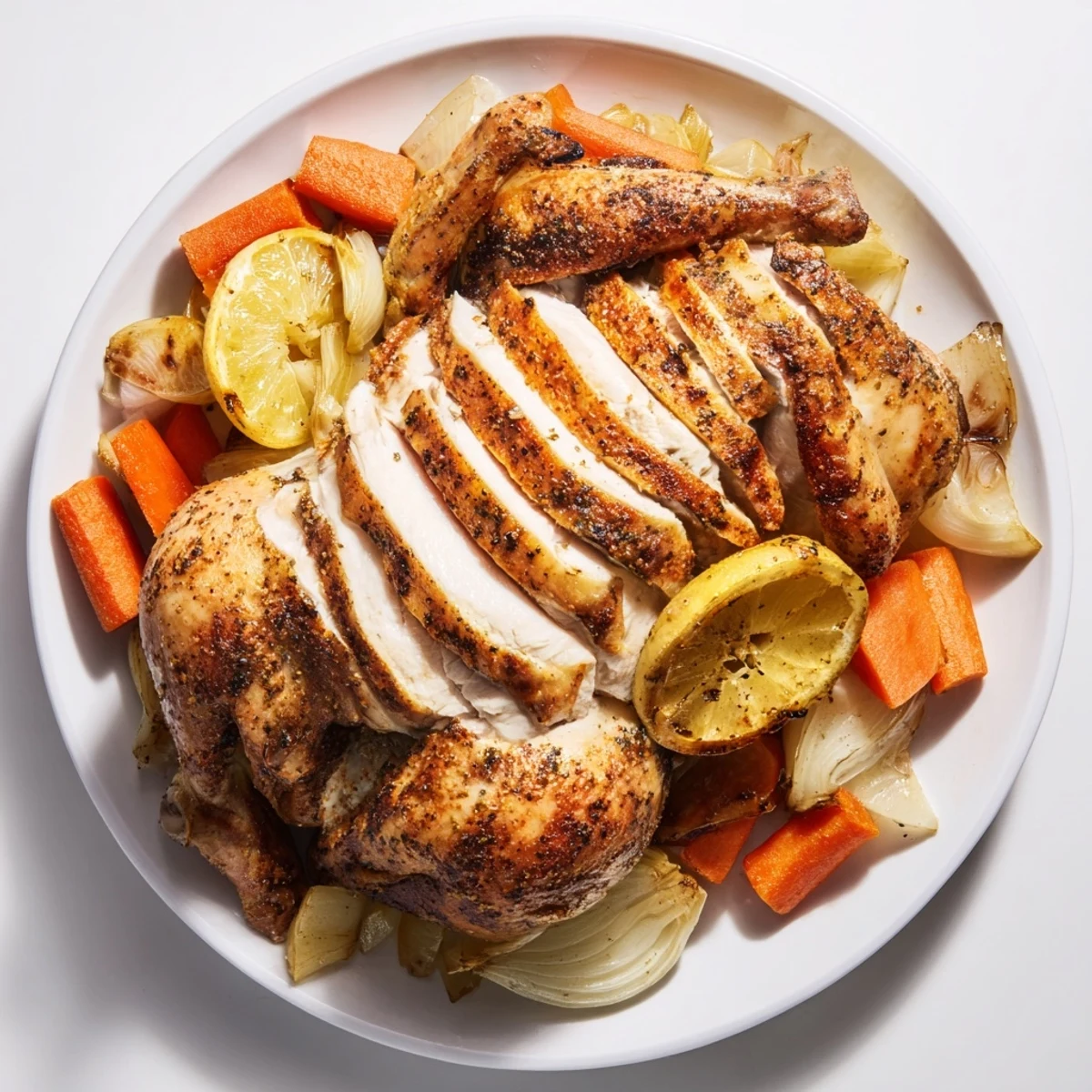
- Pull it out, let it sit for 10 minutes so the juices settle, then carve and serve with those sweet roasted vegetables.
 Pin this
 There was a night I served this to friends who had only ever known me as someone who ordered takeout. One of them looked up mid bite and said, when did you learn to cook like this. I did not tell her it was the easiest thing I had made all month.
How to Know When It Is Done
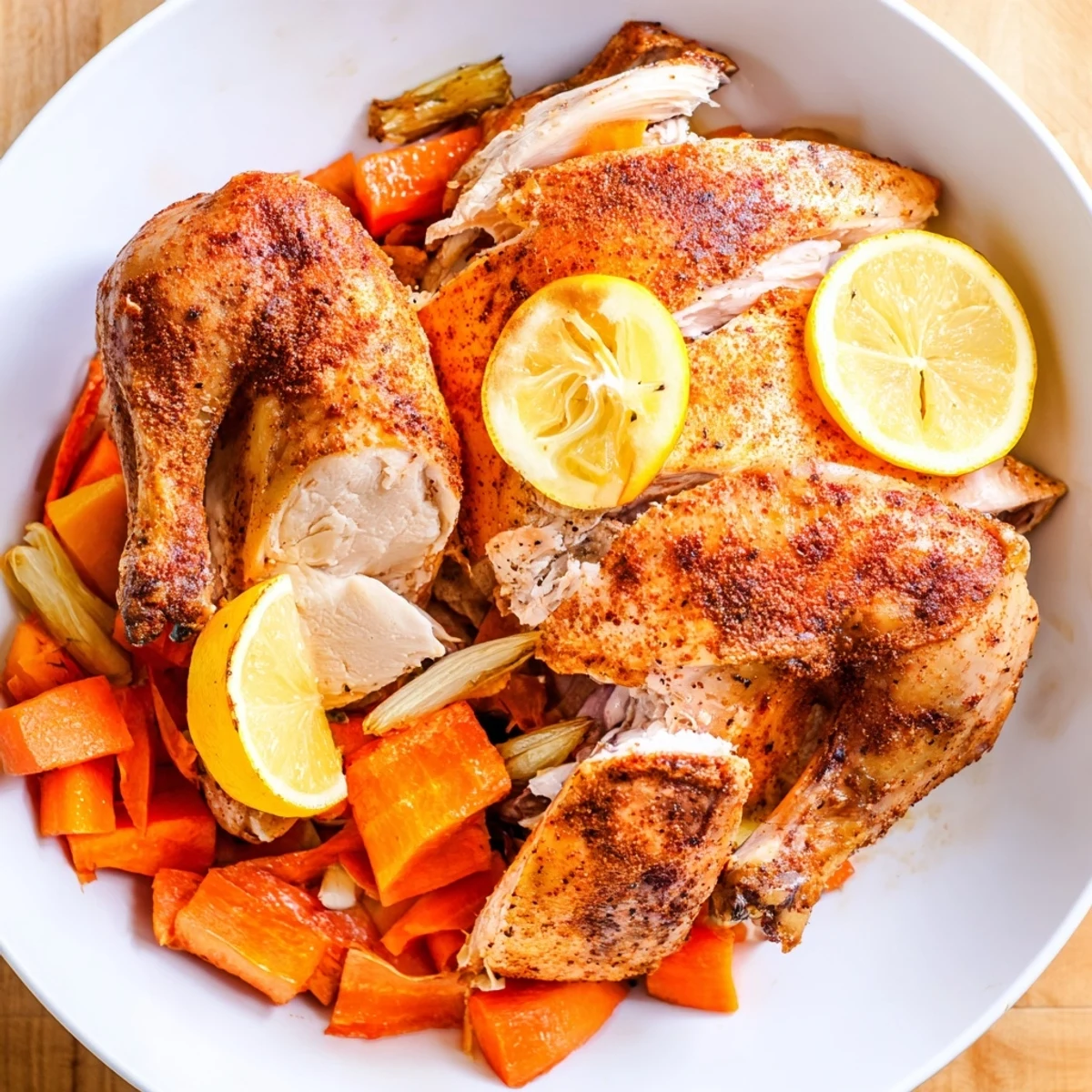
The juices should run clear when you pierce the thickest part of the thigh, and a thermometer inserted there should read 75°C (165°F). The leg will wiggle loosely in its socket when you give it a gentle tug. Trust your senses, the chicken will tell you when it is ready.
What to Do With Leftovers
Shred the meat and toss it with the pan vegetables for grain bowls, or pile it onto crusty bread with a little mayo and sea salt. The carcass makes the best stock if you simmer it with water, a splash of vinegar, and whatever vegetable scraps you have around. I have never regretted making extra just to have it in the fridge.
Serving Suggestions and Pairings
This chicken does not need much alongside it, but mashed potatoes or soft polenta will catch the pan juices beautifully. A crisp green salad or roasted Brussels sprouts add contrast without competing. If you are pouring wine, a Chardonnay or Sauvignon Blanc mirrors the lemon and herbs without overwhelming the simple flavors.
- Serve it family style on a big platter so everyone can grab what they want.
- Spoon the pan drippings over the carved meat right before it hits the table.
- Save a few herb sprigs to tuck around the platter, it makes it look like you tried even though you did not.
 Pin this
 This is the recipe I make when I want my home to smell like someone who has everything under control, even when I do not. It works every single time.
Recipe Questions & Answers
- → What temperature is best for slow roasting chicken?
-
Slow roasting is ideal at around 150°C (300°F) to ensure the meat cooks evenly while retaining moisture.
- → How do herbs enhance the flavor during slow roasting?
-
Fresh herbs like thyme and rosemary infuse the chicken with aromatic flavors as it cooks, making each bite fragrant and savory.
- → Why is chicken basted during cooking?
-
Basting with pan juices keeps the chicken moist and helps develop a rich, golden skin texture.
- → Can I substitute fresh herbs with dried ones?
-
Yes, substitute dried herbs at about one third the quantity of fresh to maintain balance in flavor.
- → What sides pair well with slow roasted chicken?
-
Mashed potatoes, crusty bread, or roasted vegetables complement the tender chicken and soak up flavorful pan juices.