
 Pin this
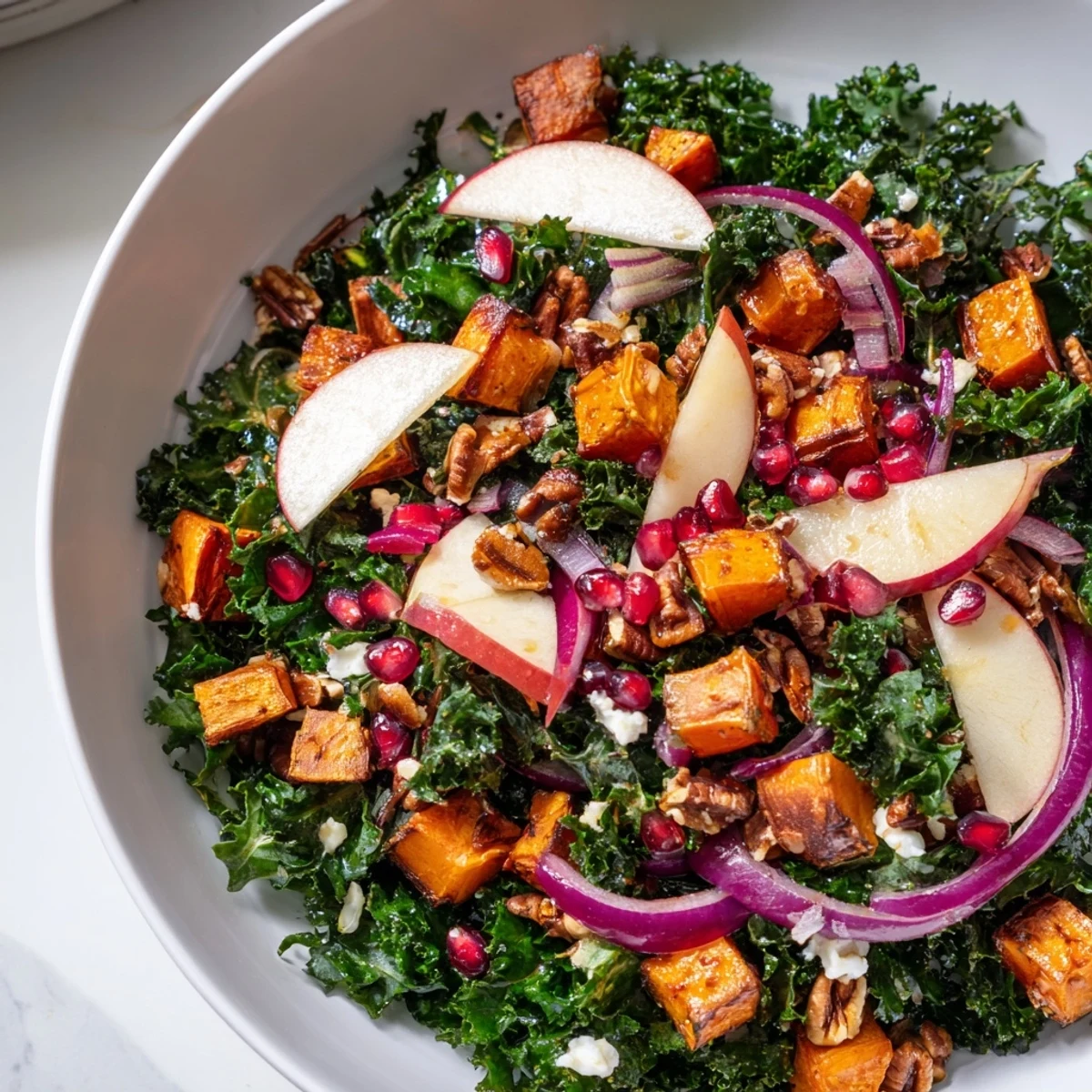
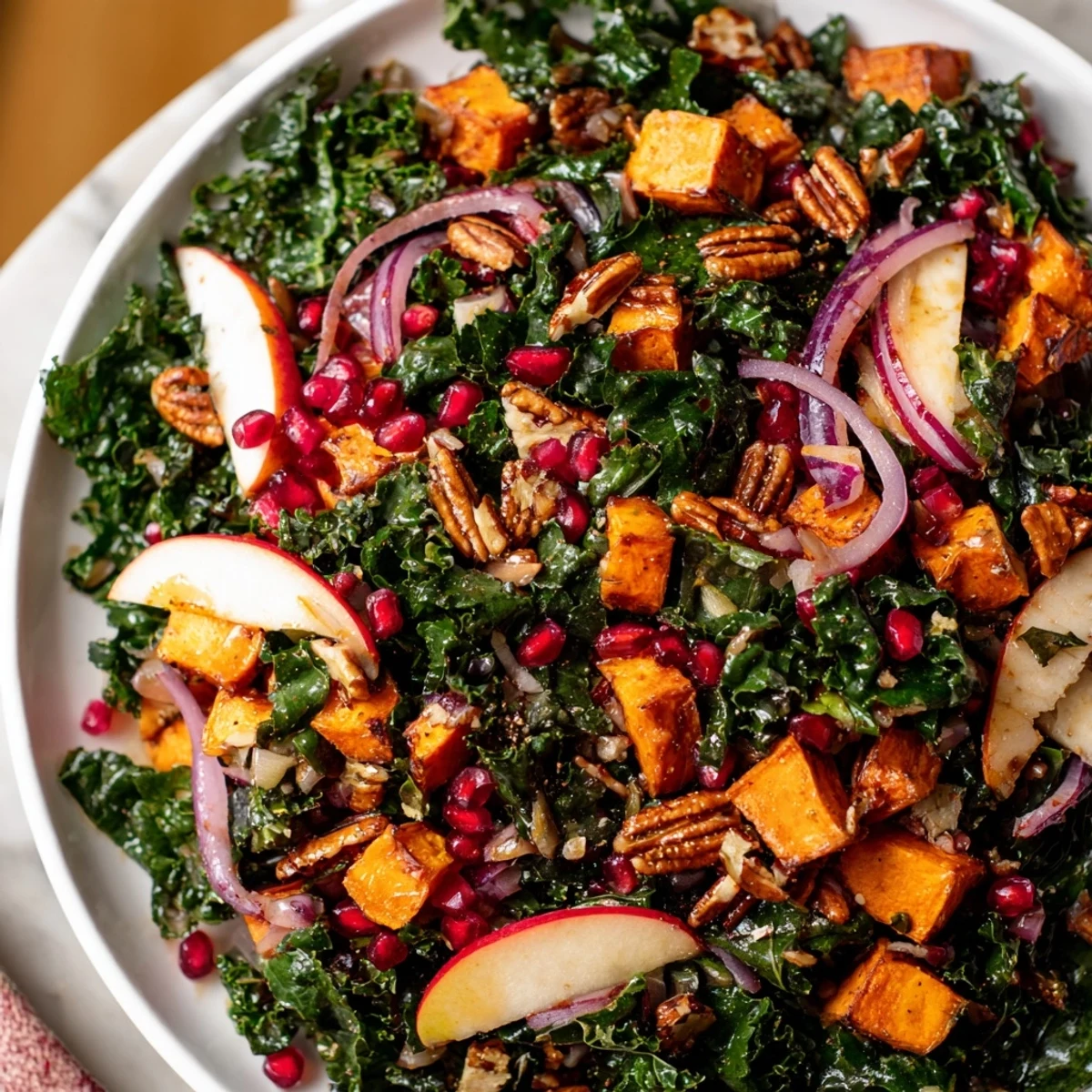
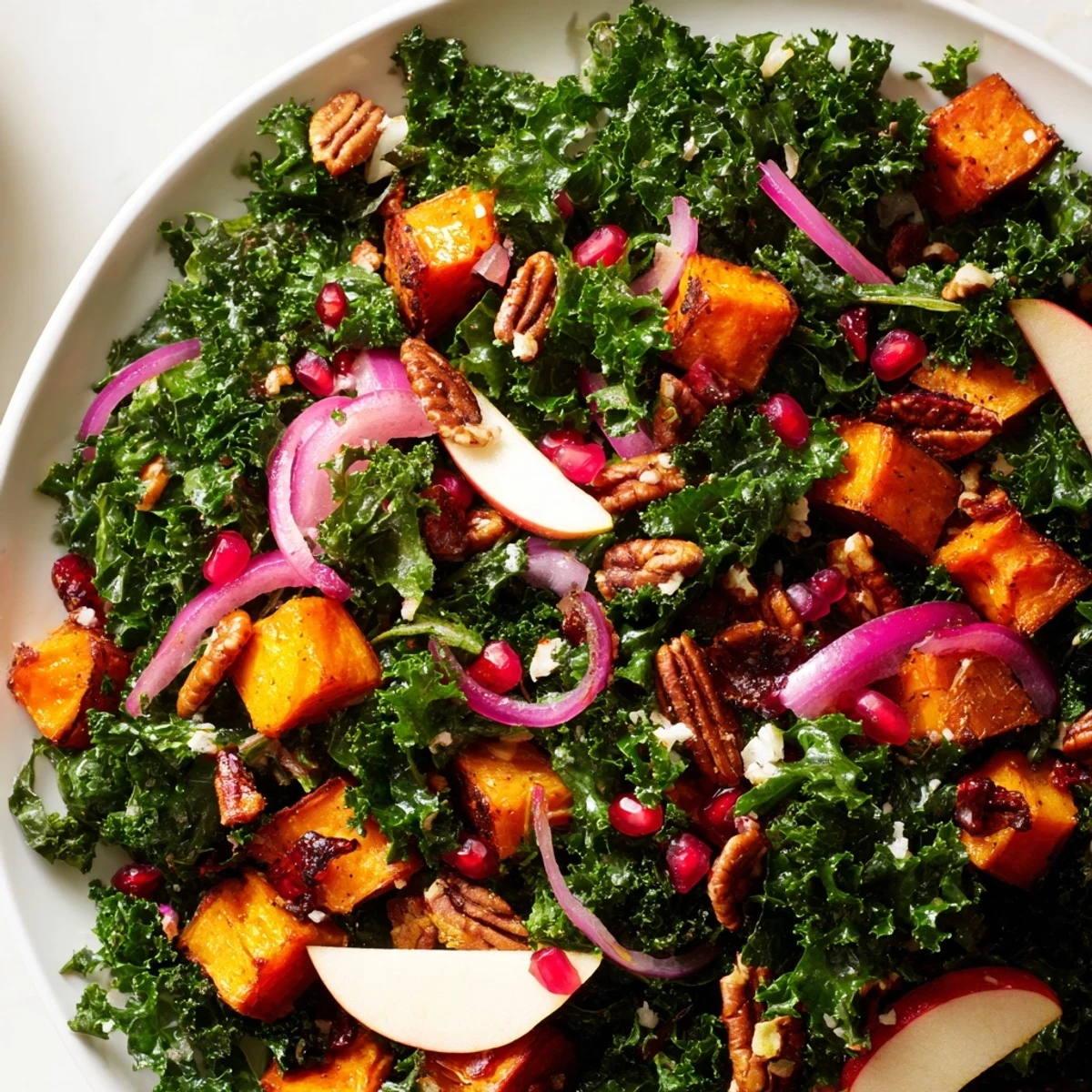
 This winter kale dish brings together hearty chopped kale massaged to soften, sweet roasted sweet potato, tart apple slices, and crunchy pomegranate seeds. A bright citrus dressing of olive oil, lemon, orange juice, and Dijon mustard adds tang, while toasted nuts and optional feta cheese provide texture and richness. This colorful salad is quick to prepare, full of seasonal flavors, and perfect for a light yet satisfying meal during colder months.
Roasting the diced sweet potato until golden enhances its natural sweetness, complementing the crisp apples and juicy pomegranate seeds. Tossing the ingredients with a zesty dressing balances earthy and bright notes. The kale's robust fibers soften with gentle massaging, ensuring a pleasant texture throughout. This dish suits vegetarian and gluten-free preferences, with suggestions for vegan adaptation.
There's something about November that makes me crave salads again, which sounds strange until you realize I'm talking about the kind that actually satisfies. A friend brought this exact combination to a dinner party, and I watched people keep going back for more, drawn to the warm roasted sweetness against the assertive kale. It wasn't delicate or fussy—it was honest food that tasted like someone understood what your body needs when the sun sets early.
I made this for myself on a random Tuesday after a long day, expecting nothing special, and somehow it reset my whole evening. The smell of caramelizing sweet potato filled my kitchen for the first time in months, and I remembered why roasting vegetables matters—it's like they're finally telling you who they're meant to be.
Ingredients
- Kale: Use the curly kind if you can find it, as the texture holds up beautifully when massaged and keeps better in leftovers than the flimsy varieties.
- Sweet potato: Medium is the sweet spot—large ones take forever and can dry out before the edges caramelize.
- Red onion: Raw and thin-sliced, it stays crisp and adds a sharp note that keeps the salad from feeling too comforting and heavy.
- Apple: Slice it just before serving or toss with a squeeze of lemon juice so it doesn't brown and lose its crispness.
- Pomegranate seeds: These are the jewels that make people smile when they see the finished plate—worth seeking out in season.
- Pecans or walnuts: Toast them lightly in a dry pan if you have the time and patience, but honestly the raw ones work too and save you a step.
- Feta cheese: The saltiness cuts through everything and keeps the salad interesting; skip it only if you're going fully plant-based.
- Olive oil: Extra virgin matters here since it's not being heated, so spend a little more on something you actually like the taste of.
- Lemon and orange juice: Fresh juice from actual fruit makes a difference—bottled juice tastes flat and slightly off by comparison.
- Dijon mustard: Acts as an emulsifier so your dressing actually coats the leaves instead of pooling at the bottom.
- Honey or maple syrup: Just enough to balance the acids and remind you this salad is meant to feel nourishing, not punitive.
Instructions
- Get the oven ready and prep the potatoes:
- Heat your oven to 400°F and line a baking sheet with parchment paper—this prevents sticking and makes cleanup a non-event. Toss your diced sweet potato with just enough olive oil to coat lightly, season with salt and pepper, then spread it out in a single layer.
- Roast until golden and tender:
- Roast for 20 to 25 minutes, giving everything a stir halfway through so the edges get evenly caramelized. You'll know it's ready when a fork goes through easily and the pieces have turned a deeper gold at the corners.
- Massage the kale into submission:
- While the potatoes roast, add your chopped kale to a large bowl with a good pinch of salt. Massage it firmly with your hands for a minute or two—it will transform from tough and waxy to silky and dark, which is exactly what you want.
- Combine everything except the nuts:
- Once the potatoes have cooled slightly, add them to the kale along with the sliced red onion, apple, and pomegranate seeds. Toss gently to distribute everything evenly.
- Make a dressing that actually emulsifies:
- In a small bowl or jar, combine olive oil, lemon juice, orange juice, Dijon mustard, honey, salt, and pepper. Whisk or shake vigorously for about 30 seconds until it looks slightly creamy and unified rather than separated.
- Dress the salad and let it rest:
- Pour the dressing over everything and toss until every leaf glistens. If you have time, let it sit for 10 minutes before eating—the kale softens even more and all the flavors start talking to each other.
- Finish with crunch and salt:
- Top with your chopped nuts and crumbled feta cheese right before serving, so they stay crisp and don't get sad and soggy.
 Pin this
 This salad became my answer to the question "what do I actually want to eat right now?" in a way that surprised me. It showed up to a potluck at work and somehow made everyone feel less guilty about eating something real and substantial during gray months.
Why This Salad Works in Winter
Summer salads are easy—vegetables are at their peak, you're craving cold things, and basically anything tastes good. Winter salads are a different challenge, which is why this one uses roasted vegetables that actually taste like something instead of pale raw winter produce. The warm-cold contrast keeps it interesting, and the citrus dressing provides brightness when everything else in the season feels muted. Kale is at its sweetest in cold months too, which means you're not fighting the ingredient—you're working with it.
Dressing as the Secret Weapon
I used to think salad dressing was an afterthought, just something to make leaves slippery enough to swallow. Then I learned that a properly emulsified dressing actually clings to every leaf and creates flavor that tastes intentional. The combination of citrus, mustard, and honey in this one is specifically designed to taste bright without being sour, and to feel balanced rather than making your face pucker. Making it in a jar with a tight lid means you can shake it rather than whisk, which honestly works just as well and takes one tool out of the sink.
Variations That Actually Taste Good
The beauty of this salad is that it welcomes small changes without falling apart—roasted butternut squash works beautifully if sweet potato isn't calling to you, and adding chickpeas or cooked quinoa transforms it from side dish into something you could eat for dinner. I've made it with roasted beets, with walnuts instead of pecans, and with sunflower seeds when I was out of nuts. The point is the structure, not the exact ingredients, so feel free to trust what's in your kitchen and your own preferences.
- Roasted Brussels sprouts add a earthy, slightly bitter note that deepens the complexity.
- Swap feta for goat cheese if you want something creamier or skip dairy entirely for a vegan version.
- A handful of fresh parsley or mint at the end brings a herbaceous freshness that makes everything taste more alive.
 Pin this
 This salad taught me that eating well during cold months isn't about deprivation or punishment—it's about finding what actually nourishes you and tastes good enough that you want it again. Make it once and it becomes part of your rotation, the kind of dish that feels like taking care of yourself without feeling like you're missing anything.
Recipe Questions & Answers
- → How do I soften kale for this dish?
-
Massage chopped kale with a pinch of salt for 1–2 minutes until it darkens and softens, making it more tender and easier to eat.
- → Can I substitute the sweet potato with another vegetable?
-
Yes, butternut squash works well roasted in place of sweet potato, providing a similar sweetness and texture.
- → What nuts complement this salad best?
-
Pecans or walnuts add a pleasant crunch and slightly sweet, buttery notes, balancing the bright citrus dressing.
- → Is it possible to make the dish vegan?
-
Omit the feta cheese or use a plant-based alternative to keep the salad vegan while maintaining texture and flavor.
- → How should I store leftovers?
-
Keep leftovers refrigerated in an airtight container for up to 2 days. For best texture, add nuts just before serving.
- → Can I prepare the citrus dressing ahead?
-
Yes, mix and store the dressing in the fridge for up to 2 days. Whisk before pouring over the salad for even flavor.