
 Pin this
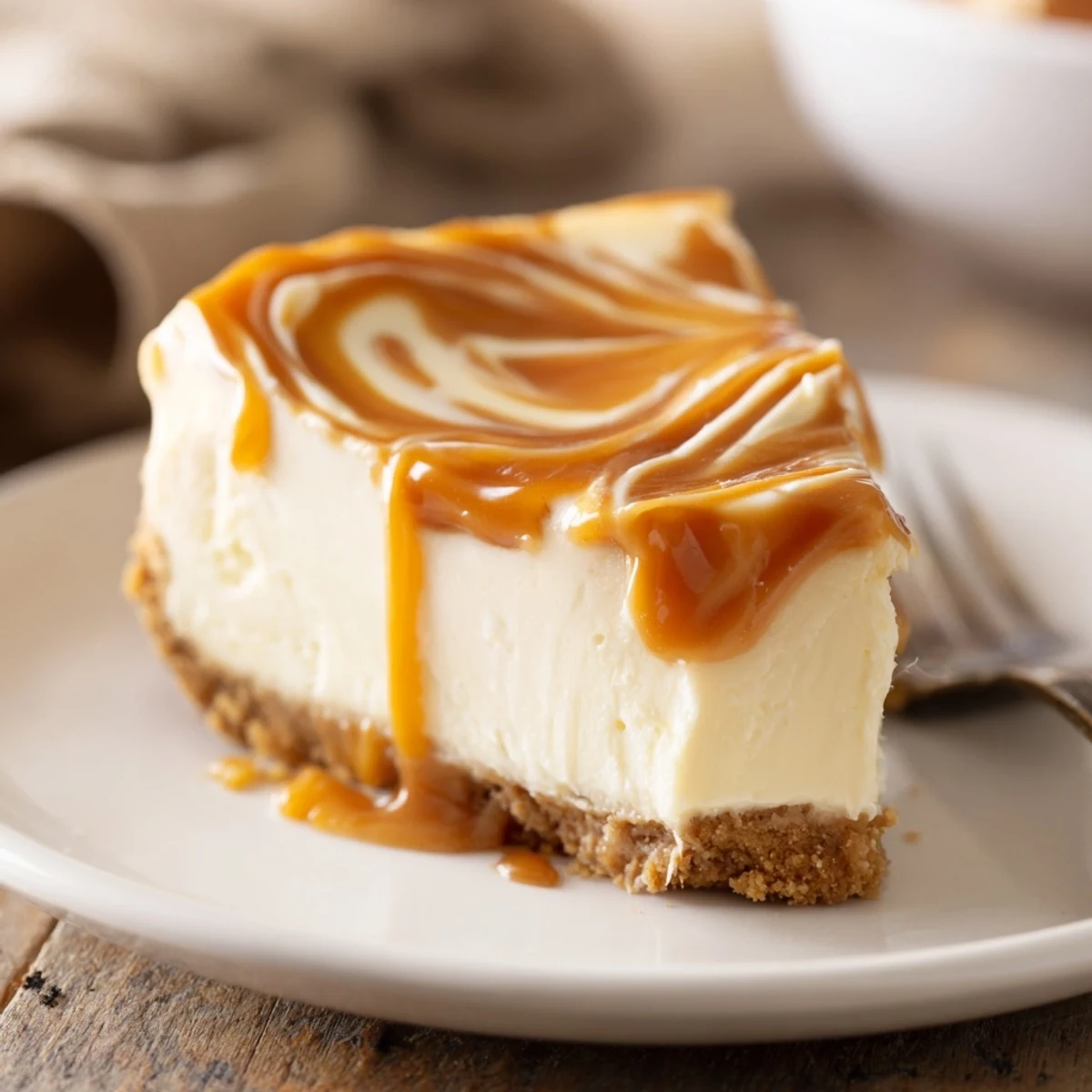
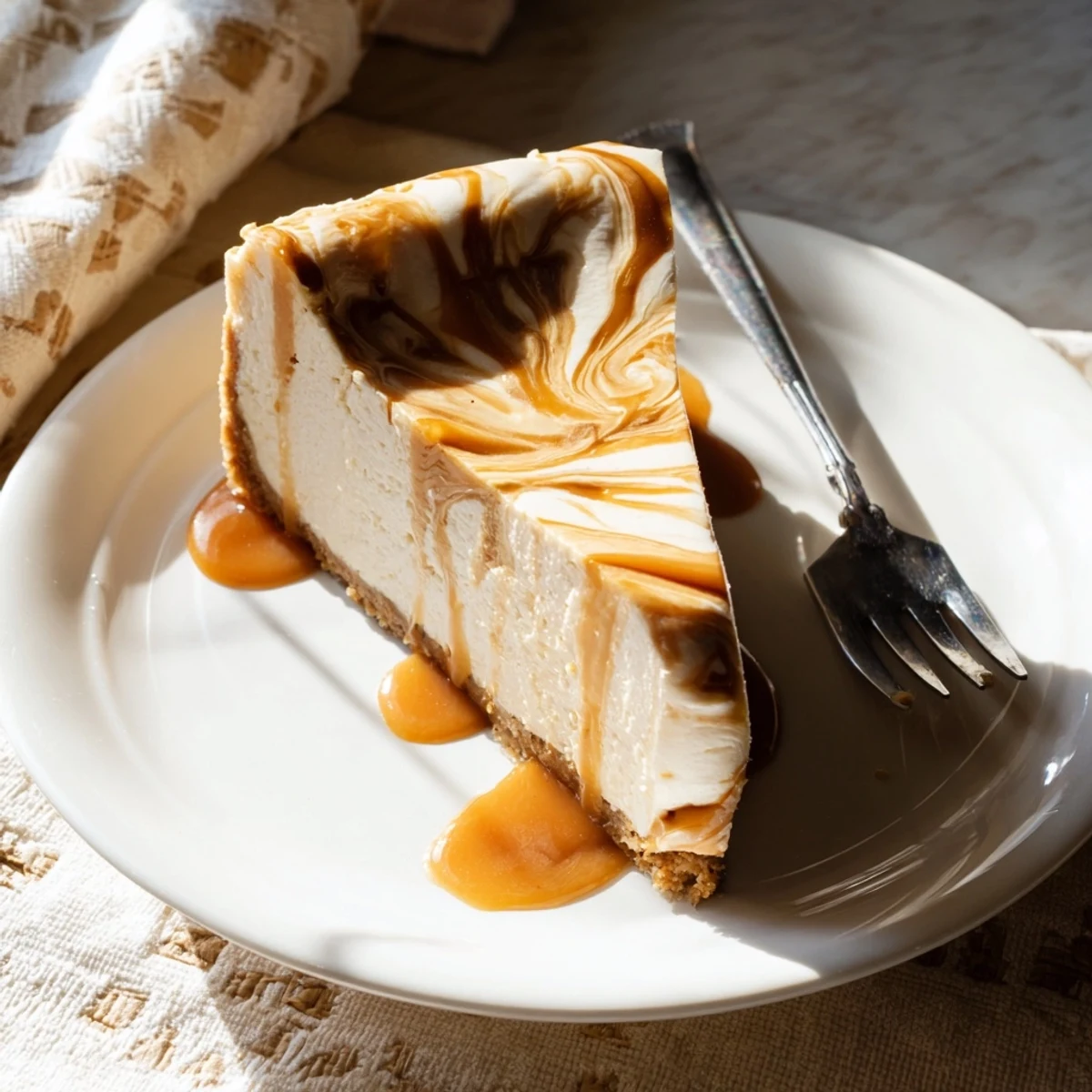
 This indulgent dessert combines a smooth, creamy cheesecake filling with beautiful ribbons of homemade or store-bought caramel sauce. The base features a classic buttery graham cracker crust that provides the perfect crunchy contrast to the velvety filling. Creating the signature swirl pattern is simple—just layer the caramel between portions of the cheesecake batter and gently marble it with a skewer or knife. The result is a stunning dessert that tastes as impressive as it looks, ideal for dinner parties, holidays, or whenever you want to treat yourself to something truly special.
The first time I attempted caramel swirl cheesecake, I stood in my kitchen at midnight watching ribbons of golden sauce disappear into cream cheese filling. My husband wandered in, sleepy-eyed, and asked what I was doing up so late. When I showed him the pan, he said, "that's going to be breakfast, isn't it?" He wasn't wrong.
I brought this to a friend's birthday dinner last autumn, and her usually quiet father went back for a third slice. Later, he cornered me in the kitchen to ask exactly how I got those caramel ribbons so evenly distributed. The secret, I told him, is letting go of perfection and just trusting the swirl.
Ingredients
- 200 g graham crackers: Crushing these by hand creates the ideal texture for a crust that holds together without becoming brick-hard
- 80 g unsalted butter, melted: Let this cool slightly after melting so it doesn't turn your crumb mixture into a paste instead of a pressable crust
- 2 tbsp granulated sugar: Just enough sweetness to complement the crackers without overshadowing the caramel
- 900 g cream cheese, softened: I learned the hard way that room temperature cream cheese prevents the lumpy disaster that cold cream cheese guarantees
- 200 g granulated sugar: This amount balances the tang of cream cheese without becoming cloyingly sweet
- 1 tsp vanilla extract: Pure extract makes a difference here since vanilla is one of the primary flavor notes
- 4 large eggs: Also at room temperature, because cold eggs can cause the filling to seize and curdle
- 180 ml sour cream: The secret ingredient that adds tang and ensures an incredibly smooth, creamy texture
- 2 tbsp all-purpose flour: Just enough to stabilize the filling without making it taste floury or dense
- 240 ml caramel sauce: Store-bought works beautifully, but homemade caramel will make this dessert unforgettable
Instructions
- Prepare your crust foundation:
- Preheat your oven to 175°C (350°F) and grease a 23 cm springform pan, lining the base with parchment paper for easy removal later
- Build the buttery base:
- Combine crushed graham crackers, melted butter, and sugar in a medium bowl, then press the mixture firmly into the bottom of your prepared pan
- Bake the crust briefly:
- Bake for 10 minutes until fragrant and set, then set aside to cool while you prepare the filling
- Beat the cream cheese:
- Using a stand mixer or hand mixer, beat the softened cream cheese until completely smooth, scraping down the bowl to ensure no lumps remain
- Add sweetness and flavor:
- Beat in the granulated sugar and vanilla extract until the mixture becomes light and creamy
- Incorporate the eggs gently:
- Add eggs one at a time, beating briefly after each addition just until incorporated, being careful not to introduce too much air
- Finish the filling:
- Mix in the sour cream and flour until just combined, stopping immediately once you no longer see dry flour streaks
- Layer and swirl the caramel:
- Pour half the cheesecake filling over the cooled crust, drizzle with half the caramel sauce, and use a skewer or knife to create gentle swirling patterns
- Add the final layer:
- Top with the remaining cheesecake filling, drizzle with the rest of the caramel, and swirl again for that beautiful marbled effect
- Remove trapped air:
- Tap the pan gently against the counter several times to release any air bubbles trapped in the filling
- Bake until just set:
- Bake for 50-60 minutes until the edges are set but the center still has a slight wobble, like gentle Jell-O
- Cool gradually in the oven:
- Turn off the oven, crack the door open slightly with a wooden spoon, and let the cheesecake rest inside for 1 hour
- Chill thoroughly before serving:
- Cool completely at room temperature, then refrigerate for at least 4 hours or preferably overnight for the best texture and flavor
 Pin this
 Last Christmas, my sister claimed she didn't even like cheesecake until she tried this version. Now she requests it for every family gathering, and I've started keeping individual portions in my freezer for when she visits unexpectedly.
Making Your Own Caramel
Homemade caramel transforms this cheesecake from excellent to extraordinary. The process is simpler than most people expect, and the result is infinitely superior to store-bought versions.
The Perfect Water Bath
While not strictly necessary, baking your cheesecake in a water bath helps prevent cracks and ensures even cooking. Simply wrap the outside of your springform pan with several layers of heavy-duty foil and place it in a roasting pan filled with hot water halfway up the sides.
Serving And Storage
This cheesecake keeps beautifully in the refrigerator for up to five days, and the flavors actually deepen over time. You can also freeze individual slices wrapped tightly in plastic and foil for up to three months.
- Let frozen slices thaw in the refrigerator overnight for the best texture
- Add a sprinkle of flaky sea salt just before serving to enhance the caramel flavor
- Use a hot knife, wiped clean between cuts, to get picture-perfect slices
 Pin this
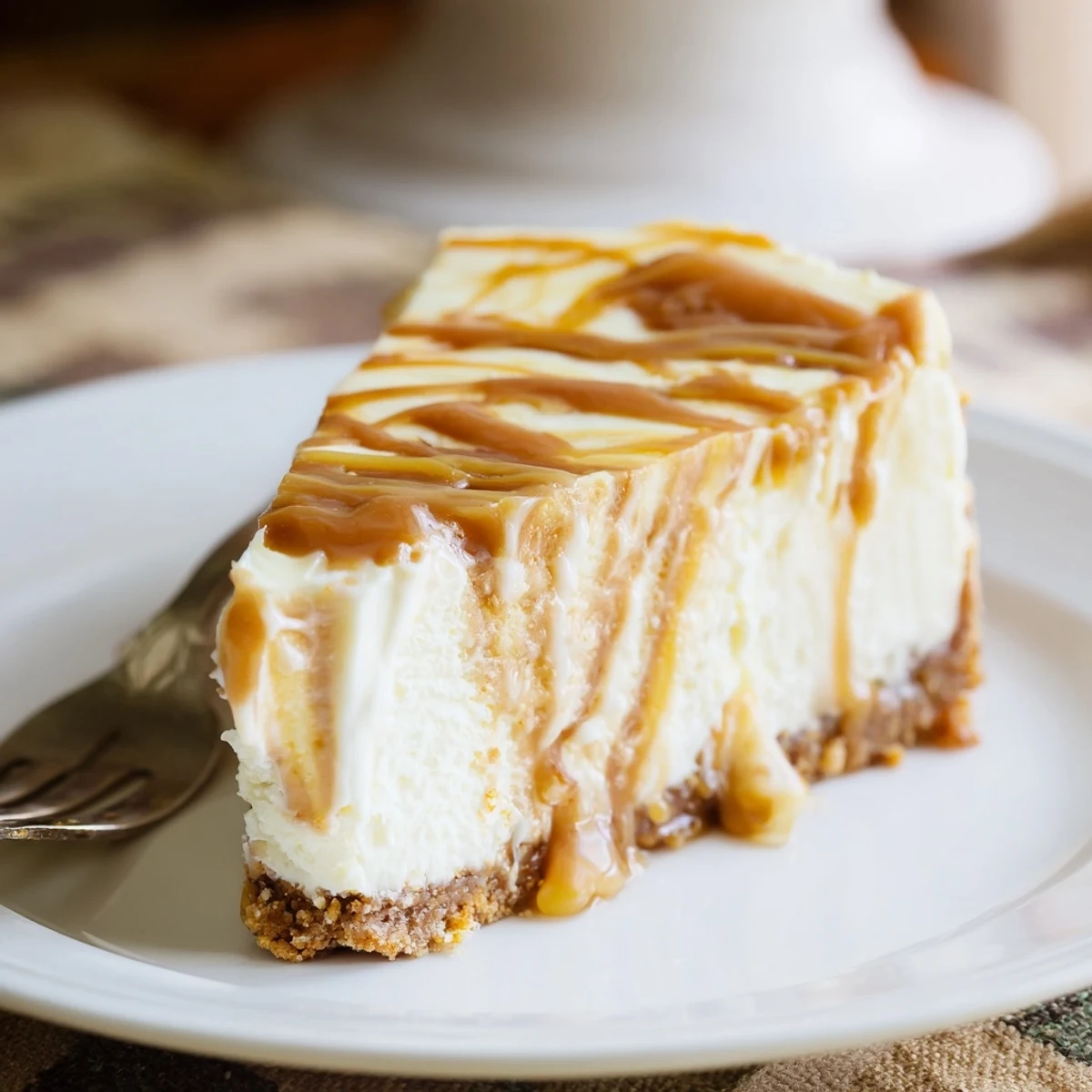
 There's something deeply satisfying about slicing into this cheesecake and revealing those beautiful golden ribbons. It's the dessert that keeps people asking, "when will you make this again?"
Recipe Questions & Answers
- → How long should I chill the cheesecake before serving?
-
Refrigerate for at least 4 hours, though overnight chilling is recommended for the best texture and flavor. This allows the caramel to set properly and the cheesecake to fully firm up.
- → Can I make the caramel sauce from scratch?
-
Absolutely. Melt 200 g sugar in a dry pan until golden, then carefully add 120 ml heavy cream while stirring. Finish by mixing in 30 g butter for a rich, homemade caramel.
- → Why does my cheesecake crack during baking?
-
Cracking often occurs from overmixing the batter or rapid temperature changes. Avoid opening the oven door frequently, and use the gradual cooling method by leaving the door slightly ajar after baking.
- → What can I use instead of graham crackers?
-
Digestive biscuits make an excellent substitute and are widely available. Crush them the same way and combine with melted butter and sugar for the crust.
- → How do I know when the cheesecake is done baking?
-
The edges should be set while the center remains slightly wobbly—similar to gelatin. It will continue cooking as it cools in the oven, so don't overbake or it will become dry.
- → Can I freeze this cheesecake?
-
Yes, wrap the cooled cheesecake tightly in plastic wrap and foil, then freeze for up to 3 months. Thaw overnight in the refrigerator before serving.