
 Pin this
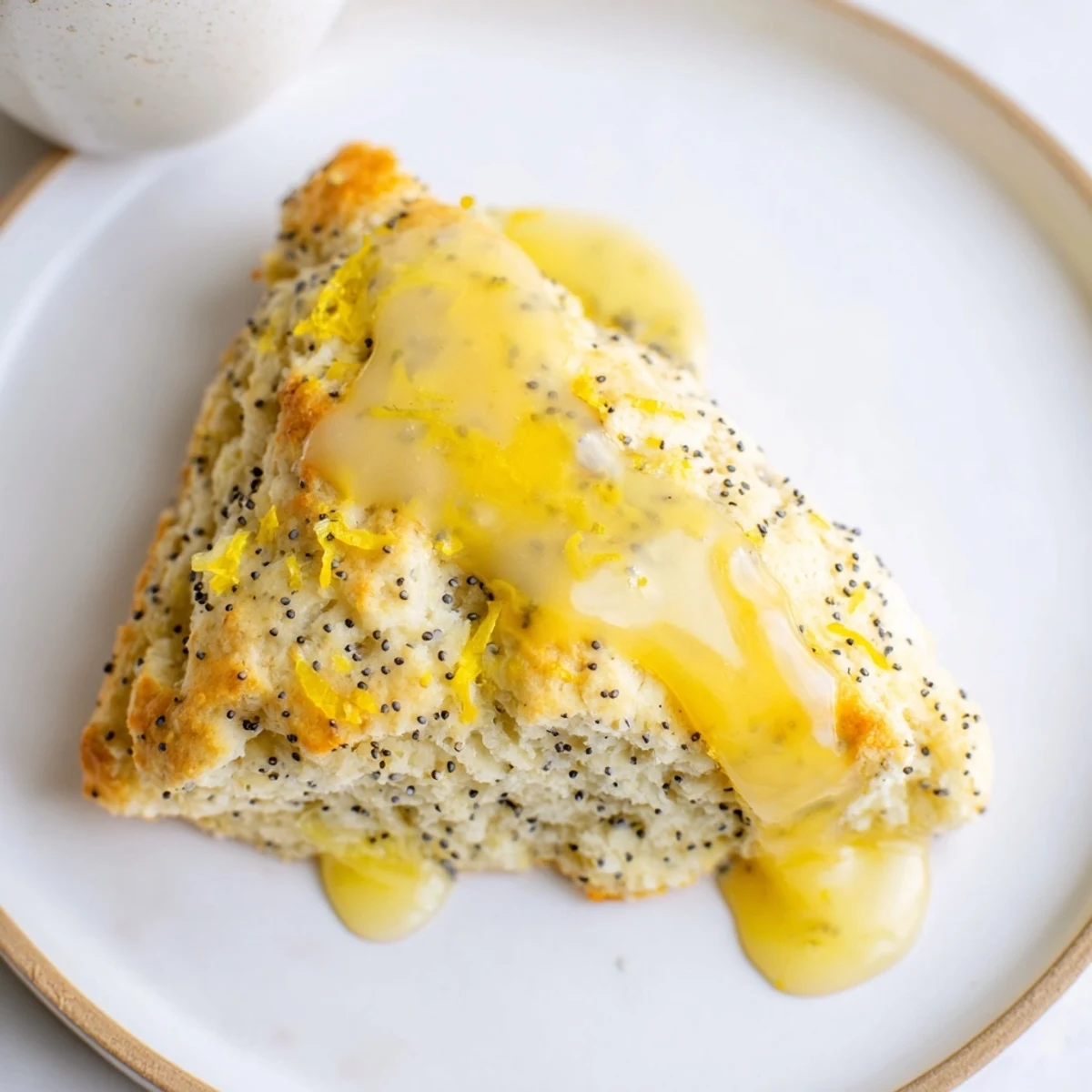
 Delight in tender, buttery scones filled with zesty lemon and crunchy poppy seeds. The dough combines cold butter and heavy cream for richness, while fresh lemon zest and juice add bright citrus notes. After shaping into wedges, they bake to a golden brown and are topped with a tangy lemon glaze that enhances every bite. Perfect for breakfast or a snack, these scones offer a delicious balance of sweet and tart flavors with a satisfying crumbly texture.
The smell of lemon zest hitting cold butter on a cutting board still stops me in my tracks. I was experimenting with morning bakery items during what I called my year of scones, trying dozens of variations until this particular combination made my whole kitchen feel like a sunny patio. Something about the way the tart glaze settles into those tender, buttery layers just works.
My sister called me midbite on her first visit after I had perfected this recipe, demanding to know what bakery Id woken up at 5am to visit. The silence when I told her Id made them myself was absolute victory. Now whenever I need to remind someone that baking is about love, not complexity, these appear on the counter.
Ingredients
- 2 cups (250 g) all-purpose flour: The structure holding everything together, dont pack it down when measuring
- 1/3 cup (65 g) granulated sugar: Just enough sweetness to let the lemon shine without competing
- 1 tbsp poppy seeds: These little crunches are what make every bite interesting
- 1 tbsp lemon zest: Use a microplane and really get into the yellow, the white parts are bitter
- 2 tsp baking powder: Working with the soda to give you that impressive rise
- 1/4 tsp baking soda: The secret to the tender crumb structure
- 1/2 tsp salt: Brightens all the flavors and keeps them from falling flat
- 1/2 cup (115 g) unsalted butter, cold and cubed: Cold butter creates those flaky pockets that define a great scone
- 2/3 cup (160 ml) heavy cream: The fat content here makes them tender rather than tough
- 1 large egg: Binding and richness in one neat package
- 2 tbsp fresh lemon juice: Acid activates the baking powder for extra lift
- 1 tsp vanilla extract: Always use pure, the imitation stuff has a weird aftertaste
- 3/4 cup (90 g) powdered sugar: For the glaze that makes them look professional
- 2 tbsp fresh lemon juice: Start with two tablespoons for the glaze, add more if you want it thinner
Instructions
- Get your oven ready:
- Preheat to 400F (200C) and line a baking sheet with parchment paper, the parchment saves you from scrubbing later
- Mix the dry foundation:
- Whisk together flour, sugar, poppy seeds, lemon zest, baking powder, baking soda, and salt in a large bowl until everything looks uniform
- Work in the butter:
- Add cold cubed butter and cut it into the flour mixture using a pastry cutter or your fingertips until you see coarse crumbs, some pea-sized pieces of butter should remain
- Combine the wet mixture:
- In a separate bowl, whisk together the heavy cream, egg, lemon juice, and vanilla extract until smooth
- Bring it together gently:
- Pour the wet ingredients into the dry ingredients and stir with a spatula until just combined, the dough should look shaggy and not perfectly smooth
- Shape the scones:
- Turn the dough onto a lightly floured surface, pat into a 7-inch (18 cm) circle about 1 inch (2.5 cm) thick, handle it as little as possible
- Cut and arrange:
- Cut into 8 wedges and arrange on the prepared baking sheet with space between them for the oven to work its magic
- Add the finishing touch:
- Brush tops with a little extra heavy cream for that beautiful golden finish
- Bake until golden:
- Bake for 16 to 18 minutes until they are golden brown, then let them cool on a wire rack so the bottoms dont get soggy
- Make the glaze:
- Whisk together powdered sugar and lemon juice until smooth and pourable, adding more juice a teaspoon at a time if needed
- Glaze and serve:
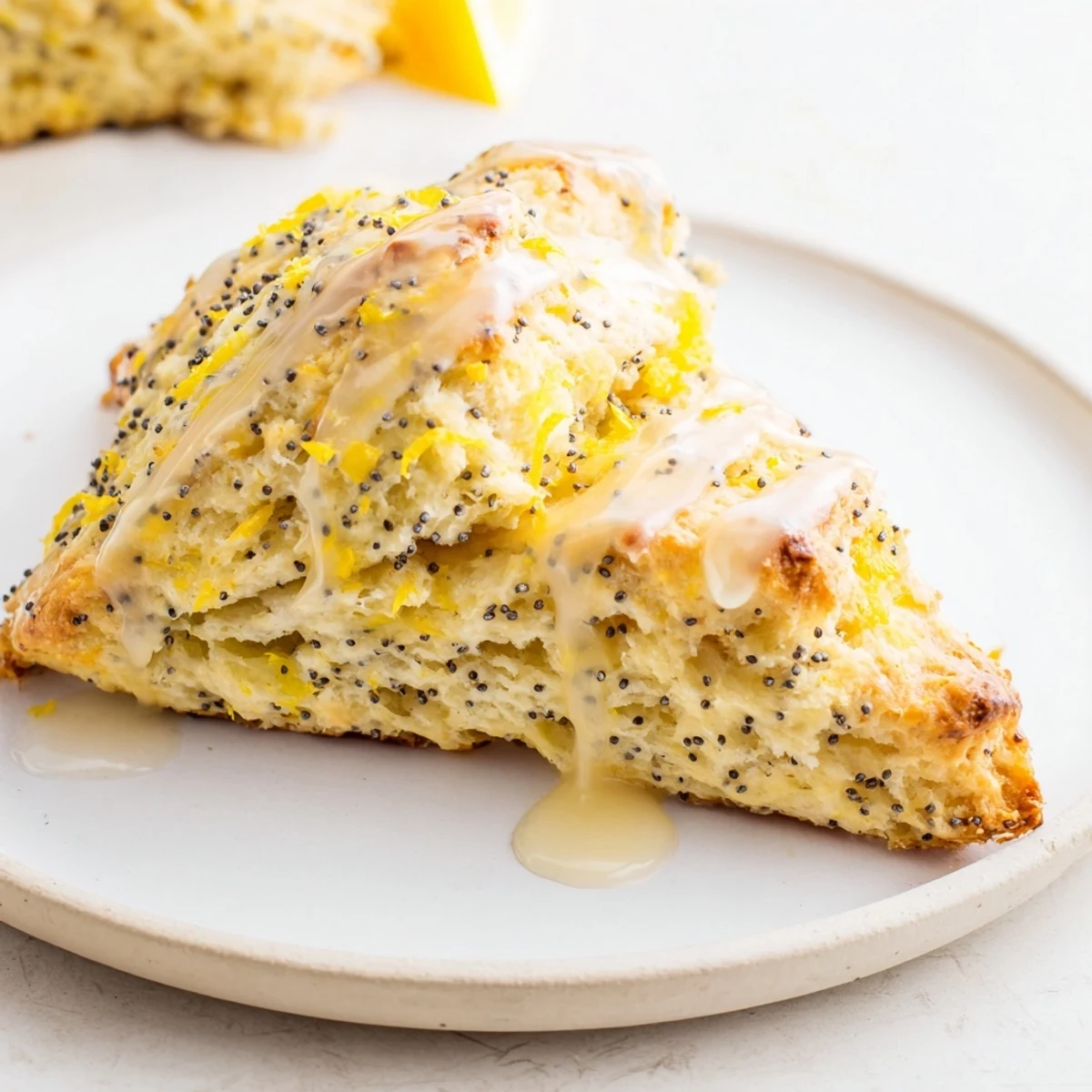
- Drizzle the glaze over cooled scones and let it set before serving, or serve warm if you cannot wait another second
 Pin this
 These scones became my go-to contribution to every brunch invitation after my friend Sarah took one bite and actually closed her eyes. She keeps asking if I can deliver them frozen so she can surprise her mother on Sunday mornings, which I consider the highest possible compliment.
Making Them Ahead
You can cut the wedges and freeze them unbaked on a baking sheet, then transfer to a bag. Bake from frozen, adding a few minutes to the time, and you have fresh scones without the morning effort.
Glaze Consistency
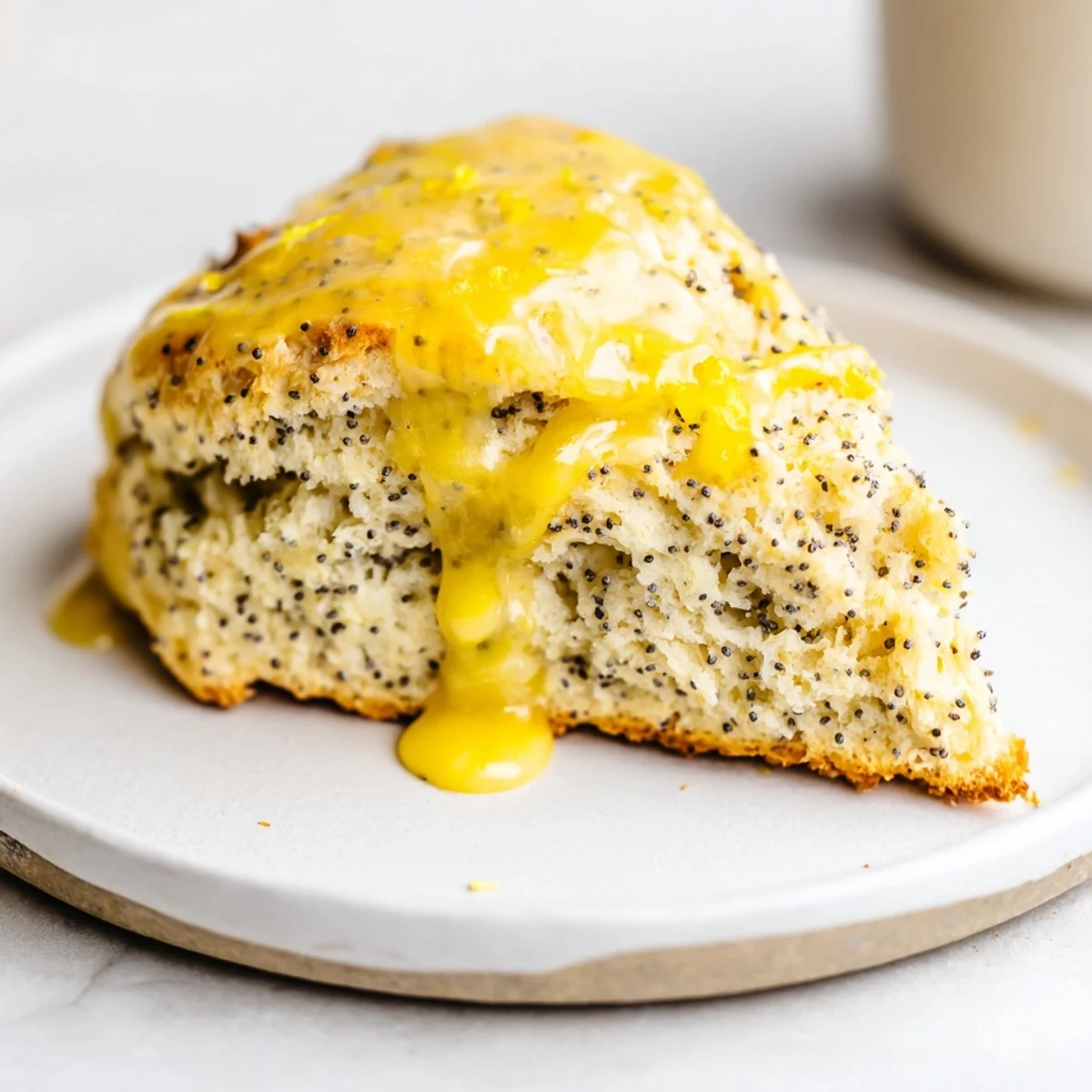
Thick glaze sits on top like icing, thin glaze soaks in like a sweet syrup. I prefer something in the middle that drips enticingly down the sides without making the scone soggy.
Serving Suggestions
These are perfect with a strong cup of coffee or Earl Grey tea, the way the British intended. Serve them slightly warm with the glaze still tacky for maximum impact.
- Split and add clotted cream if you want to go full tea shop
- Pair with fresh berries to balance the richness
- They keep for two days but are best the first day
 Pin this
 There is something deeply satisfying about pulling a tray of these from the oven, the lemon scent filling the kitchen like a promise of something good to come.
Recipe Questions & Answers
- → What gives these scones a tender texture?
-
The use of cold, cubed butter cut into the flour creates flaky layers, while the addition of heavy cream adds moisture, resulting in a tender crumb.
- → How do poppy seeds affect the flavor and texture?
-
Poppy seeds add a subtle nutty flavor and pleasant crunch, balancing the brightness of the lemon.
- → Can I substitute ingredients for dietary preferences?
-
For a tangier variation, replace half the heavy cream with Greek yogurt. Ensure other ingredients meet your dietary needs.
- → What is the best way to achieve a shiny top on the scones?
-
Brushing the scone tops with additional heavy cream before baking promotes a golden, slightly glossy finish.
- → How should the lemon glaze be applied?
-
Once the scones have cooled, drizzle the lemon glaze evenly over the surface and let it set for a sweet-tart finish.