
 Pin this
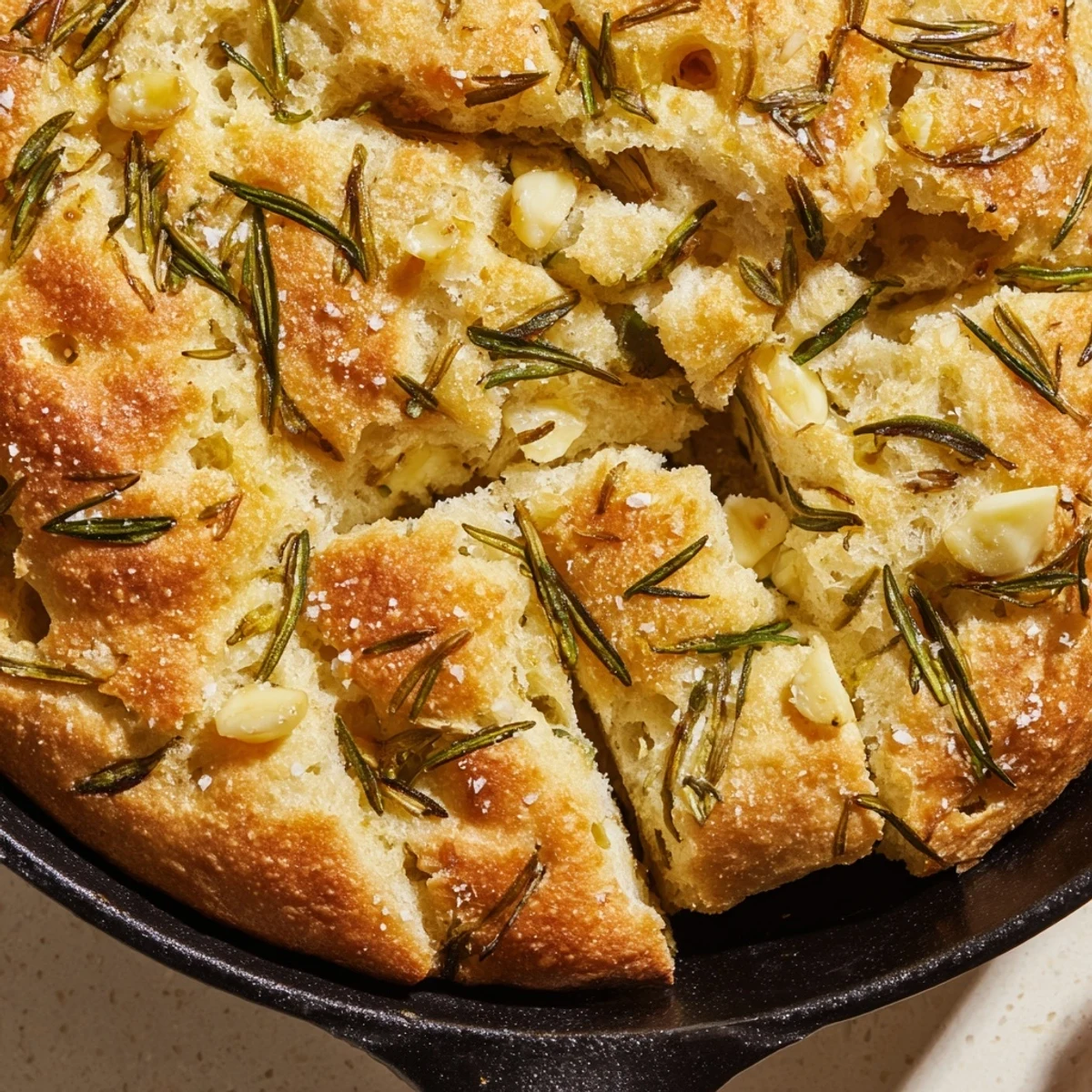
 Create a warm, inviting centerpiece for your table with this rustic skillet bread. The dough comes together with simple pantry staples—bread flour, yeast, olive oil—then gets transformed by aromatic garlic and fresh rosemary. After rising, the loaf bakes in a cast-iron skillet, developing those coveted crispy edges while maintaining a soft, chewy interior. The finishing touch of flaky sea salt adds satisfying crunch. Perfect alongside soups, stews, or simply dipped in quality olive oil, this European-inspired bread brings bakery-quality results to your home kitchen with minimal effort.
My apartment smelled like an Italian grandmother's kitchen the first time I made this skillet bread. I'd come home from the farmers market with a massive bundle of rosemary and fresh garlic, suddenly inspired to bake something that would fill every corner of my place with warmth. The whole building seemed to know what I was up to.
Last winter, my neighbor knocked on my door while this was baking, convinced I'd hidden a professional bread maker somewhere in my studio apartment. We ended up sharing the whole loaf right out of the skillet, tearing pieces off while steam still rose from the crumb, talking about everything and nothing until the bread disappeared.
Ingredients
- Bread flour: The higher protein content creates that beautifully chewy texture you want in rustic bread
- Active dry yeast: Make sure your water is warm but not hot, around 105°F works perfectly to wake those little organisms up
- Fresh rosemary: I've tried dried herbs in a pinch but nothing beats the fragrance of fresh rosemary baked into the dough
- Garlic: Roasting the cloves first creates this mellow sweetness, but raw minced garlic gives you that punchy kick
- Flaky sea salt: This finishing touch creates these delicious salty crystals that burst on your tongue
Instructions
- Wake up the yeast:
- Whisk the warm water and yeast together, watching for that foamy layer that tells you everything's alive and working
- Build the foundation:
- Add flour and salt, mixing until you have this shaggy, messy dough that somehow feels promising
- Make it yours:
- Drizzle in olive oil, rosemary, and garlic, kneading until the aromatics are distributed throughout and your dough feels alive
- Let it rest:
- Cover your dough in a warm corner and walk away for an hour, letting time do its transformative work
- Prepare the skillet:
- Coat your oven-safe skillet generously with oil, then press the risen dough toward the edges like you're tucking it in
- Second rise:
- Cover the skillet and let the dough puff up again while your oven heats to 425°F
- Finish with flair:
- Brush the surface with olive oil and scatter flaky salt across the top, creating these glistening salty pockets
- Bake until golden:
- Slide the skillet into the hot oven and wait 30 to 35 minutes until your kitchen smells divine and the crust turns deep golden brown
- Enjoy warm:
- Let it cool just enough to handle, then tear into it while it's still warm and the steam escapes
 Pin this
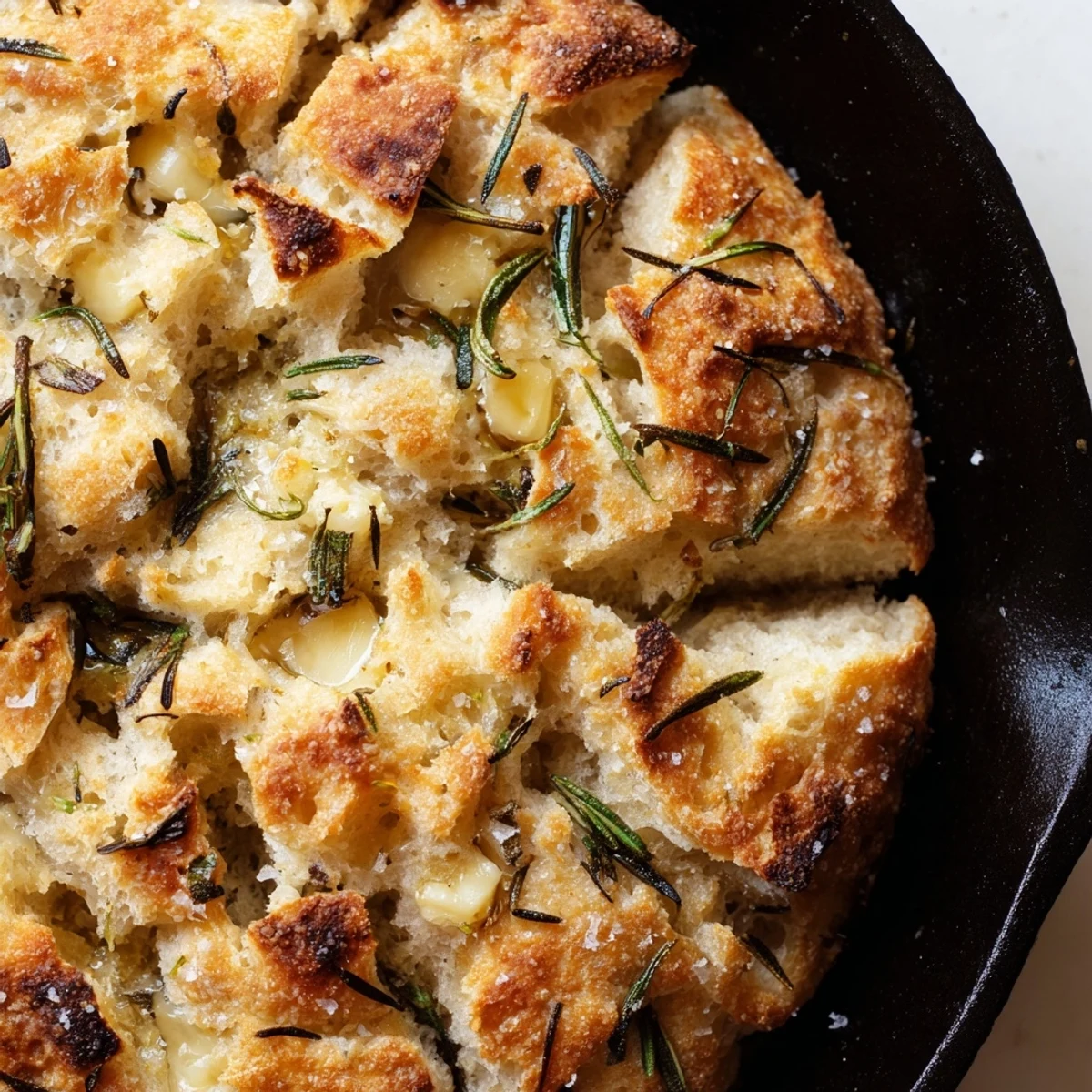
 This recipe became my go-to dinner party trick after the first few times I made it. Something about breaking bread from a cast iron skillet makes conversation flow easier and linger longer.
Making It Your Own
I've played with different herb combinations and found that thyme works beautifully if you're not feeling rosemary. Sometimes I add caramelized onions to the dough, which creates these sweet pockets throughout the crumb that people always ask about.
The Skillet Secret
Cast iron really does make a difference here, holding heat so evenly that the bottom crust develops this incredible crunch. If you don't have one, any oven-safe skillet will work, but the texture might be slightly different.
Serving Ideas
This bread disappears fastest when I serve it with a bowl of olive oil for dipping. I also love tearing chunks directly into soup, letting the bread soak up all that broth.
- Try adding a few tablespoons of grated Parmesan to the dough for extra depth
- The leftovers make amazing toast the next morning, topped with scrambled eggs
- Wrap any extra slices tightly and they'll stay fresh for two days
 Pin this
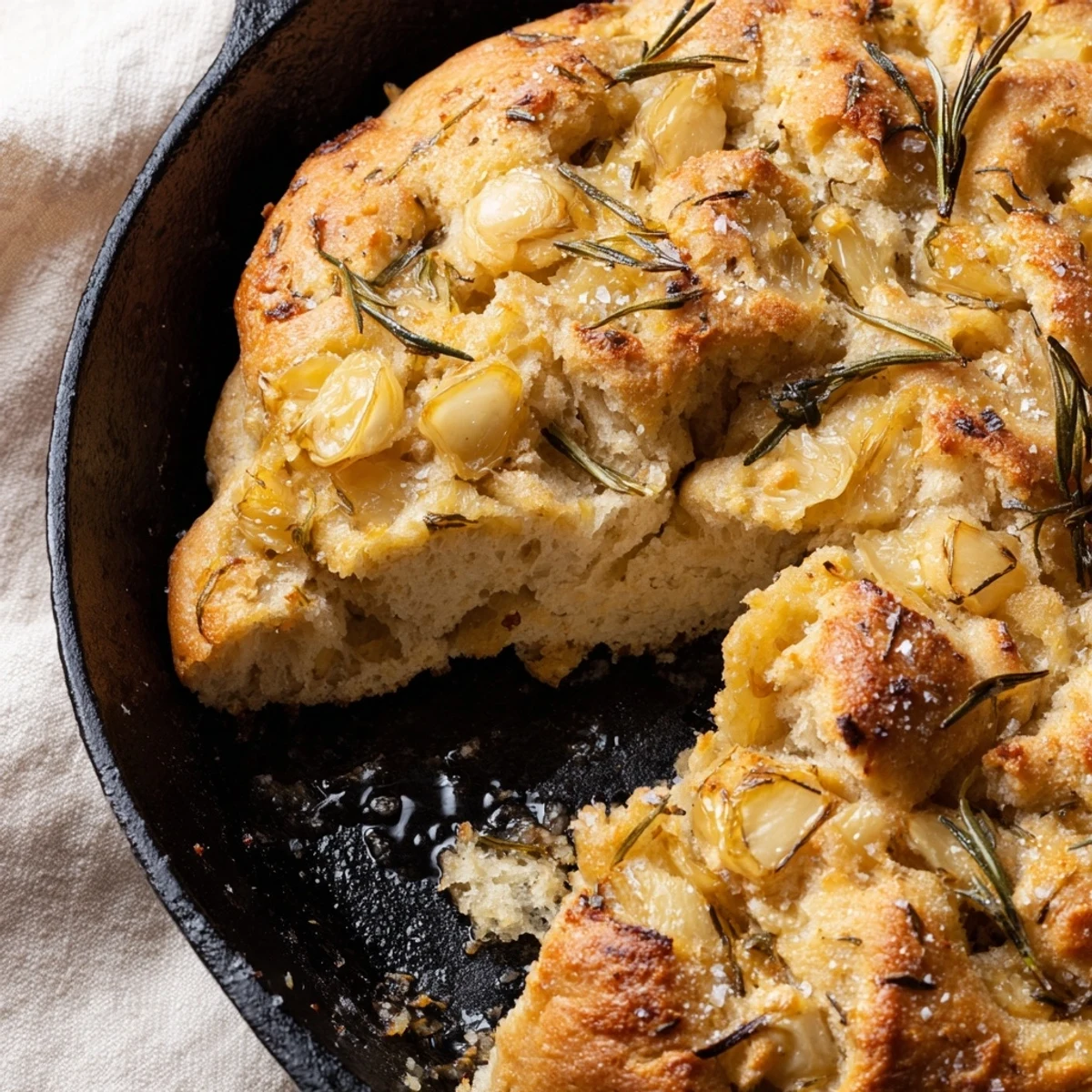
 There's something deeply satisfying about pulling homemade bread from a skillet, the steam rising as you carry it to the table. This recipe reminds me that the best things in life are often the simplest.
Recipe Questions & Answers
- → Can I use all-purpose flour instead of bread flour?
-
Bread flour provides the best texture due to its higher protein content, creating that desirable chewy crumb. All-purpose flour will work but may yield a slightly softer, less structured loaf. For best results, stick with bread flour.
- → Do I need to roast the garlic first?
-
While roasting garlic beforehand deepens its sweetness, it's not necessary. The minced garlic cooks alongside the bread, mellowing and infusing the dough with flavor during baking. For extra depth, try roasting cloves for 20 minutes at 400°F before mincing.
- → Can I make this without a cast-iron skillet?
-
Any oven-safe 10-inch skillet will work, though cast iron provides superior heat distribution for those signature crispy edges. Alternatively, bake on a preheated baking stone or pizza steel. A regular baking sheet works too, though crust texture may vary slightly.
- → How long will this bread stay fresh?
-
This loaf tastes best the day it's made, when the crust is at its crispest. Store leftovers wrapped in a cloth or paper bag at room temperature for up to 2 days. To refresh, warm slices in a 350°F oven for 5-10 minutes. Freezing works well—wrap tightly and thaw at room temperature.
- → Can I substitute dried rosemary for fresh?
-
Fresh rosemary delivers superior aroma and flavor, but dried works in a pinch. Use about one-third the amount—roughly 2 teaspoons dried instead of 2 tablespoons fresh. Rehydrate the dried herbs in warm water for 10 minutes before adding to the dough for better distribution.
- → What herbs pair well with the garlic in this bread?
-
While rosemary creates a classic combination, try fresh thyme, sage, or oregano for different flavor profiles. A blend of Italian herbs works beautifully, or add chopped fresh parsley for brightness. Each herb brings its own character—thyme offers earthiness, sage provides warmth, oregano adds bold Mediterranean notes.